


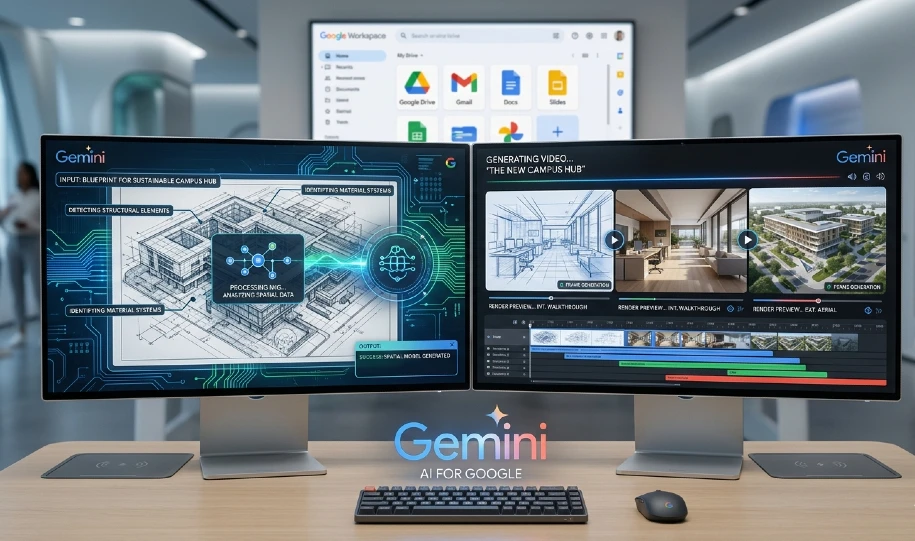
Google’s Gemini multimodal AI just pulled off something that even skeptics have to respect. In a market crowded with ChatGPT, Claude, and a dozen rising challengers, Gemini quietly climbed to the number two spot in global AI usage rankings. Not through a viral moment or a flashy keynote — through actual product improvement that people chose to use.
Ten million new users. That’s not a rounding error. That’s a movement.
What Actually Happened — And Why It Matters Now
The driver behind this growth is Gemini Nano Banana, a lightweight but surprisingly capable model variant optimized for speed. It processes images and video faster than most users expect from a browser-based AI tool, and that speed is converting casual visitors into daily active users.
This is the pattern Google has always been good at — embedding technology so smoothly into existing workflows that adoption feels less like a choice and more like a natural evolution.
Speed wins attention. But integration wins loyalty.
Nano Banana Is the Real Story Here
Most AI coverage focuses on the flagship models. Gemini Ultra gets the headlines. But Nano Banana is what’s actually moving the needle right now.
Here’s why it works:
- Ultra-fast image processing — users get near-instant visual analysis without waiting on heavy compute
- Video understanding — short video clips can be queried, summarized, or analyzed directly
- Real-time search integration — the model pulls live web data mid-conversation, making responses feel current rather than stale
- On-device efficiency — lighter architecture means faster mobile performance, which matters enormously in global markets like South Asia, Southeast Asia, and Latin America
For users in markets with bandwidth constraints, that last point isn’t a nice-to-have. It’s the whole reason they stayed.
Google Workspace Is Now a Serious AI Productivity Stack
This is where Google is playing a long game that most people underestimate.
Gemini’s deep integration into Docs and Sheets isn’t just a feature checkbox — it’s a structural advantage. When your AI model lives inside the tools your team already uses every day, the friction to adoption drops to near zero.
Think about what that actually looks like in practice. A marketing team opens Google Docs, drafts a campaign brief, and Gemini surfaces relevant data from Sheets, suggests copy variations, and flags tone inconsistencies — all without switching tabs or apps.
That workflow used to require three separate tools: a writing assistant like Grammarly, a design prompt tool like Canva’s AI features, and a data tool. Gemini is collapsing that stack inside Workspace.
For small and mid-size business teams, this is significant. You’re not just getting AI features. You’re getting a coordinated AI layer across your entire productivity environment.
4K Generation and Real-Time Coding — What Power Users Are Using
Beyond the consumer-facing growth story, Gemini’s technical capabilities have quietly matured.
4K content generation is now part of the toolkit — meaning visual outputs are sharp enough for professional creative use, not just quick mockups. Creatives working on pitch decks, ad campaigns, or social content can generate visual assets at resolution standards that clients actually accept.
Real-time coding assistance has also improved substantially. Developers using Gemini inside Google’s coding environments report fewer hallucinated function calls and better context retention across longer code sessions. This is a practical improvement, not a marketing claim.
These two capabilities together — high-res visual generation and reliable coding support — put Gemini in direct competition with specialized tools that charge premium subscription prices.
Gemini vs. Runway ML — An Honest Comparison for Creatives
Runway ML has built a strong reputation in the creative community for video generation, and that reputation is earned. Its temporal consistency and fine-tuned control over visual style remain genuinely impressive.
But here’s the practical reality: Runway ML costs money, requires a separate workflow, and assumes users who already understand AI video production.
Gemini’s video understanding, by contrast, is embedded in a free-tier product most users already have access to. It won’t replace Runway ML for a professional filmmaker editing a commercial. But for a social media manager, a content strategist, or a small business owner who needs quick video analysis or short-form generation? Gemini is more than adequate.
The real competitive pressure from Gemini isn’t at the high end of the creative market. It’s at the wide middle — the millions of creators who need “good enough” output quickly and for free.
The Free Tier Is Quietly Powerful — Here’s What Most Users Miss
A lot of users don’t realize how much Gemini’s free tier actually offers. A few things worth knowing:
- Multimodal input is free — you can upload images, ask questions about documents, and run basic video analysis without a paid plan
- Google account integration — if you use Gmail, Drive, or Docs, Gemini can reference your content contextually in many scenarios
- Real-time search — unlike some competitors that cut off live web access at the free level, Gemini maintains real-time search on free accounts
- 4K output access varies by task type, but visual generation quality at the free tier is noticeably higher than it was six months ago
The gap between Gemini’s free and paid tiers is narrowing. That’s a deliberate strategy — get users productive on free, convert them when they hit ceilings.
Industry Impact — What This Ranking Shift Actually Signals
Gemini moving to number two in usage isn’t just a win for Google. It changes the competitive dynamics for the entire AI industry.
It validates the integration-first strategy over the capabilities-first strategy. OpenAI has focused on making ChatGPT more capable. Google has focused on making Gemini more embedded. Both approaches are working — but Google’s approach is showing faster user acquisition right now.
It also signals that multimodal AI — meaning models that handle text, images, video, and real-time data together — is becoming the baseline expectation, not a premium feature. Users who started with text-only AI tools are moving toward multimodal by default because the experience is simply more useful.
The platforms that don’t offer genuine multimodal capability within the next 12 months will feel noticeably behind.
What Comes Next
Google is unlikely to stop here. The Workspace integration roadmap reportedly includes deeper Gemini presence in Google Meet, more granular Sheets automation, and expanded enterprise features for large-team deployments.
The Nano Banana variant will probably see further optimization — Google has every incentive to keep pushing lightweight model performance as it competes in mobile-first global markets.
And the creative use case, currently Gemini’s softest competitive ground, is likely to receive deliberate investment. Matching Runway ML’s creative quality while keeping the free-tier accessibility would be a major market moment.
The race isn’t over. But Google just reminded everyone it knows how to run one.
Bottom Line: Gemini multimodal AI didn’t win on hype. It won on speed, integration, and smart free-tier access. For teams already inside Google Workspace, ignoring it at this point is leaving real productivity on the table.
check out our latest news
Claude Code Marketplace Is Quietly Becoming the Most Powerful Enterprise AI Agent Platform in 2026
