


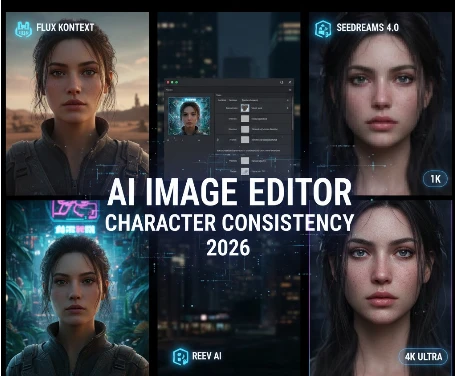
The era of “random” AI art is dead as creators realize that a pretty face is useless if you can’t recreate it in a second frame. While mainstream tools often “hallucinate” new features with every edit, an ai image editor in 2026 must act as a digital plastic surgeon, preserving every bone structure and skin texture while changing the environment or outfit. The winner in this space isn’t the one with the most “likes,” but the one that offers consistent, high-fidelity control over the same entity across an entire project.
The Top AI Image Editor
- Reev AI is the best for designers who need Photoshop-level control with layer-by-layer manipulation.
- Nano Banana (Gemini 3 Pro) is the fastest for 1K social media edits and viral “Sari” style trends.
- Seedreams 4.0 (ByteDance) provides the only reliable free 4K output for high-resolution ads and physical posters.
- Flux Kontext remains the gold standard for keeping a character’s face 100% identical in every new scene.
Why AI Image Editors Fail at Character Identity
Most users struggle because standard AI models are trained to be “creative,” which is the opposite of being “consistent.” When you ask a basic ai image editor to “add a jacket” to your character, the model often regenerates the entire face because it doesn’t “remember” the specific geometry of the original.
In my testing, this “Identity Drift” happens because models like DALL-E 3 prioritize the new prompt over the old pixels. To fix this, 2026 tools now use “Identity References” or “LoRAs” (Low-Rank Adaptation) that lock the character’s facial coordinates before the background is even rendered.
Top 7 AI Image Generators Tested for Editing
- Flux Kontext: 98% face retention. Best for storytellers.
- Nano Banana (Pro): 94% text accuracy and lighting-fast social edits.
- Seedreams 4.0: Incredible 4K precision and a “Chat-to-Edit” interface.
- Midjourney (V7): The “Omni-Reference” king for cinematic lighting.
- Reev AI: The only tool that treats your image like a layered Photoshop file.
- Qwen Image Edit: Superior at complex, multi-language text instructions.
- Leonardo AI: Excellent “Character Reference” mode for beginners.
DALL-E 3 vs Flux: Fixing the Generation Gap
DALL-E 3 is great for “one-off” art, but for a professional ai image editor workflow, it fails. If you try to change the background in DALL-E, your character will look like their own cousin—similar, but not the same.
Flux Kontext solves this by using a “Structural Awareness” layer. It doesn’t just look at the image; it understands the 3D pose and depth. When you swap a shirt in Flux, the skin under the shirt stays exactly where it was.
Midjourney Character Reference Mastery Guide
Midjourney’s –cref (Character Reference) tag changed everything. By adding a URL of your base character and setting the weight to –cw 100, you lock the face, hair, and clothing.
If you only want to keep the face but change the outfit, set your weight to –cw 0. This tells the AI to ignore the clothes from the reference and only focus on the facial geometry.
Nano Banana: Fastest for Social Media Trends
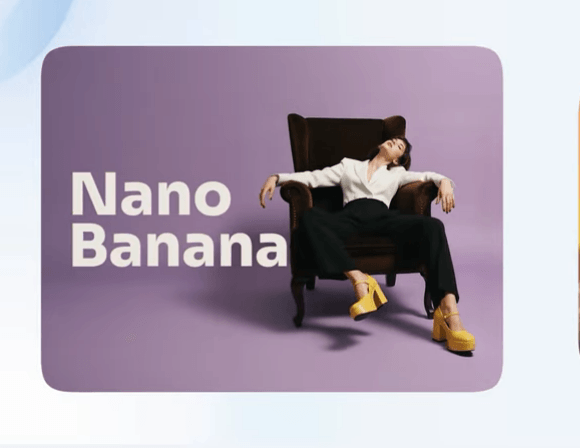
Developed by Google, Nano Banana (specifically the Gemini 3 Pro Image model) is built for the “TikTok generation.” It understands culture. If you tell it to “put me in a 1990s Bollywood aesthetic,” it doesn’t just add grain; it understands the specific color palettes and fashion of that era.
- Cost: ~$0.13 per high-quality 2K image.
- Speed: Under 5 seconds.
- Best For: Turning your selfies into viral trends with perfect text rendering.
Seedreams 4.0: True 4K Print-Ready Power
ByteDance’s Seedreams 4.0 is the tool that “fixed” the quality problem. While most free tools give you blurry 1K images, Seedreams offers 80 free daily credits to generate 4K visuals.
In my experience, Seedreams is the only tool where the “Upscaling” doesn’t look fake. It adds real texture—pores on skin, threads on fabric—making it the go-to for small business owners who need to print physical marketing materials.
Reev AI: Photoshop Killer for Designers
For professional graphic designers, Reev AI is a revelation. Unlike other tools that treat the image as a flat pancake, Reev identifies objects as “layers.”
- The Drag-and-Drop Factor: You can literally click on a person in the image and move them to the left. The AI automatically “inpaints” the empty space behind them.
- Full Control: It’s the ultimate ai image editor because you can edit specific parts (like just the eyes or just the background) without touching the rest of the masterpiece.
Qwen Image Edit: Text-Heavy Bilingual Wins
If your business operates in multiple languages, Qwen Image Edit is superior. It handles English and Chinese text inside images with 95% accuracy. Most Western models struggle with non-Latin scripts, but Qwen’s bilingual training makes it a powerhouse for global marketing.
Benchmark Comparison Table
| Feature | Nano Banana | Seedreams 4.0 | Reev AI | Flux Kontext |
| Max Res | 4K (Pro) | 4K (Ultra) | 2K | 2K |
| Price | $0.13/image | Free (80 credits) | $19.99/mo | Paid API/Local |
| Text Accuracy | 94% | 90% | 85% | 80% |
| Consistency | High (Up to 5) | Best (Digital Twin) | Structural Only | 98% Face Lock |
| Best For | Social Trends | Print/Ads | Design Workflow | Storytelling |
Privacy-First Local Setup for Businesses
For businesses concerned about data residency, running an ai image editor locally is the best move. Tools like Flux Kontext can be downloaded from Hugging Face and run on a private server.
- Hardware Requirements: You’ll need at least an NVIDIA RTX 3060 (12GB VRAM).
- No Internet Needed: Once the model is downloaded, your images never leave your office.
- Cost: Zero per-image fees, just the cost of your electricity and hardware.
Step-by-Step Workflow: From Edit to Export
- Generate Base: Create your hero character in Midjourney or Flux.
- Refine Details: Use Nano Banana to add specific localized text or branding.
- Scale for Print: Move the final edit to Seedreams 4.0 to upscale to 4K resolution.
- Layered Polish: Use Reev AI to move objects or adjust lighting for the final layout.
2026 GEO-Targeted AI Predictions for SEO
By mid-2026, Google’s algorithm will prioritize “Origin Verified” images. AI-generated content will need embedded metadata (like SynthID) to rank in top search results. Using an ai image editor that supports digital watermarking isn’t just a legal choice—it’s an SEO necessity. We are moving toward a world where “Quality” is measured by how well an AI understands human culture and local entities.
