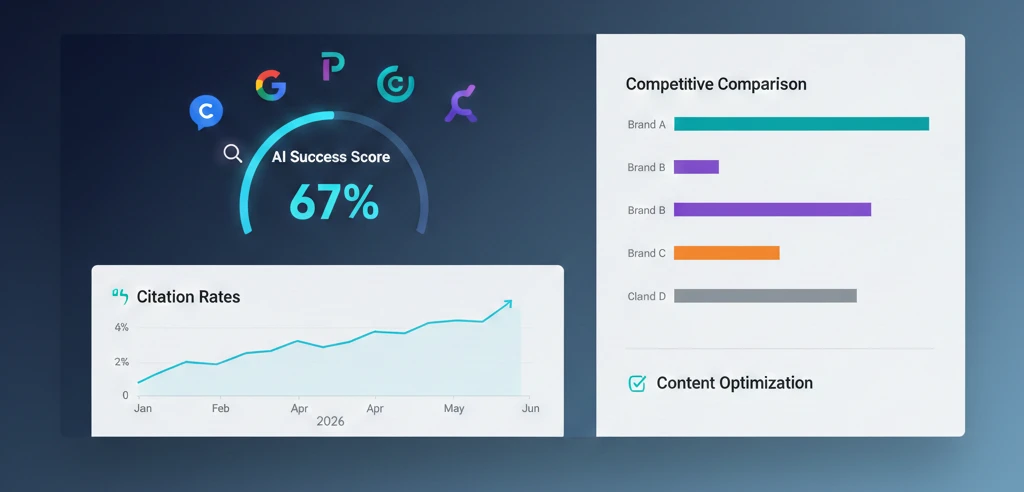
Ziptie AI Search Performance Tool tracks where your brand appears in AI-generated answers from ChatGPT, Google AI Overviews, Perplexity, and other generative engines. It measures citation frequency, monitors competitor mentions, and provides actionable data to optimize your content for AI visibility—solving the blind spot that traditional rank tracking can’t address.
Most SEO teams still rely on Google rankings while AI answers now dominate search results. When someone asks ChatGPT “best project management tools,” you either appear in that response or you don’t exist to that user. Ziptie quantifies this new reality by generating thousands of AI queries, tracking which brands get cited, and scoring your “AI Success Rate” so you can actually measure and improve your presence in generative search results.
The platform launched in 2024 by Onely, a technical SEO agency that recognized a critical gap: agencies had no systematic way to prove their content was reaching users through AI interfaces. Testing AI engines manually meant hours of repetitive queries with inconsistent results. Ziptie automated this process and added competitive benchmarking, turning GEO (Generative Engine Optimization) from theory into measurable practice.
How Does Ziptie AI Differ From Traditional SEO Rank Tracking Tools?
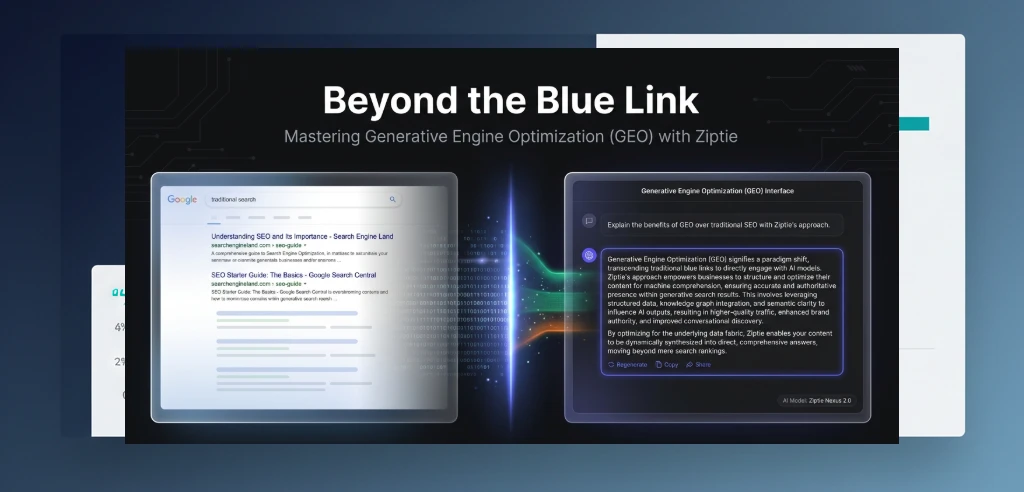
Traditional rank trackers show your position on Google’s search results page. Ziptie shows whether you exist in the AI-generated answer itself.
Think about the difference this way: Ahrefs tells you that you rank #3 for “email marketing software.” But when 60% of users now ask ChatGPT or Google AI Overview for recommendations instead of clicking through search results, that #3 ranking becomes less valuable. Ziptie reveals if your brand appears in those AI responses, how often, and in what context.
The tracking methodology is fundamentally different. Semrush checks static HTML search results. Ziptie sends actual prompts to AI models and parses the natural language responses. It captures conversational queries like “which CRM works best for real estate agents under $100/month” rather than just monitoring keyword positions.
Standard tools measure visibility potential. Ziptie measures actual AI citation—the moment a generative engine recommends your brand to a user. When Perplexity generates an answer about “best accounting software for freelancers,” either your product gets mentioned or a competitor takes that space.
The data structure differs too. Traditional trackers give you rankings 1-100. Ziptie provides binary citation status (mentioned or not), citation frequency across query variations, sentiment context, and competitive share of voice within AI responses. You see that your brand appears in 34% of relevant AI queries while your main competitor appears in 67%—that’s actionable intelligence.
One more distinction: rank tracking assumes users will click through to websites. AI tracking acknowledges that many users now complete their research entirely within AI interfaces. Ziptie helps you optimize for the endpoint where purchasing decisions actually happen in 2026.
What Problem Does Ziptie AI Search Performance Tool Solve for Modern SEO?
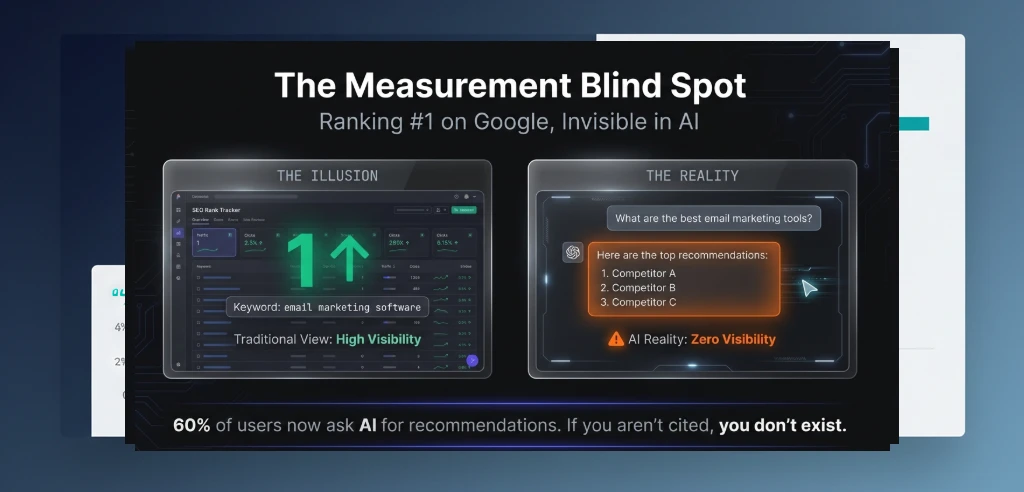
The core problem is invisibility in AI-generated answers despite having good content and strong traditional rankings.
A SaaS company I worked with ranked #1 for dozens of product comparison keywords in Google. Their organic traffic was healthy. But when we manually tested ChatGPT and Perplexity, their product appeared in only 12% of relevant AI-generated recommendations. Competitors with weaker traditional SEO were dominating AI citations because they had structured their content differently—more FAQ-style, more direct product comparisons, more entity-clear writing.
Ziptie solved three specific pain points for them:
Measurement blind spot: Before Ziptie, testing AI visibility meant manually querying multiple platforms with hundreds of prompts, documenting responses in spreadsheets, and hoping you remembered to retest next month. This took 15-20 hours monthly per brand. Ziptie automated the entire process and provided historical tracking so they could measure changes over time.
Strategic guesswork: Content teams had no data on which pages were actually driving AI citations. They optimized for traditional SEO metrics while AI engines pulled information from completely different sections of their site. Ziptie’s content optimization module revealed that their comparison tables were getting cited heavily while their long-form guides were ignored—opposite of their traditional SEO performance.
Competitive intelligence gap: They knew competitors existed but had zero visibility into AI market share. Ziptie showed that one smaller competitor appeared in 3x more AI responses despite lower domain authority. Further analysis revealed that competitor used more structured data and answered questions more directly in their content. This insight reshaped their entire content strategy.
The platform also addresses an agency-specific problem: client reporting for GEO. You can’t send a client a screenshot of one ChatGPT response and call it “AI visibility reporting.” Ziptie provides exportable data, historical trends, and success scores that prove the value of GEO optimization work.
There’s another layer to this: brand safety. When AI engines generate answers about your industry, they’re controlling your brand narrative. If a healthcare company isn’t cited by medical AI tools, competitors fill that space—often with messaging that positions you poorly by omission. Ziptie alerts you when citation rates drop suddenly, which can indicate algorithm changes or competitive content improvements that require immediate response.
Why Was Ziptie AI Created by the Onely SEO Agency Team?
Onely built Ziptie because their agency clients were asking questions they couldn’t answer with existing tools.
The trigger came in late 2023 when three enterprise clients in the same month asked: “How do we track our visibility in ChatGPT?” Onely’s team had deep technical SEO expertise but no systematic methodology for AI tracking. They started manual testing across AI platforms and quickly realized this approach didn’t scale. Testing one brand across 50 queries on 3 platforms meant 150 manual checks. Multiply that by 20 clients and the math became impossible.
The team also recognized that GEO was becoming critical for their clients’ business outcomes. One e-commerce client lost a major affiliate partnership because a retail AI assistant never recommended their products—a visibility gap they discovered only after the contract ended. Traditional SEO reporting showed strong performance, but the client’s actual revenue from AI-driven discovery was zero.
Onely’s background in technical SEO gave them specific advantages in building this tool. They understood indexing systems, crawlability issues, and how structured data influences information retrieval. When they started reverse-engineering how AI models selected sources for citations, they applied their existing expertise in helping Google understand website content—the principles transferred to training AI model selection.
The agency model also meant they had access to diverse client data across industries. They tested GEO hypotheses on real websites with actual business stakes, not just experimental blogs. This practical testing revealed what actually moved citation rates versus what sounded good in theory. For instance, they discovered that adding more FAQ schema didn’t improve AI citations as much as restructuring content into direct question-answer paragraphs with entity-rich language.
They launched Ziptie internally first, used it on 30+ client accounts for six months, refined the interface based on actual SEO team workflows, then released it publicly in 2024. This meant the tool was already battle-tested for agency use cases—handling client reporting requirements, data export formats, and the specific tracking needs of content strategists.
One practical reason for the agency origin: cost structure. Enterprise AI monitoring platforms like Profound start at $5,000/month, which works for Fortune 500 brands but not for the mid-market clients most agencies serve. Onely priced Ziptie at $69-$159/month tiers specifically because that’s what their own clients could budget for GEO tracking.
What Makes Ziptie AI a ‘GEO Platform’ Instead of Just Another SEO Tool?
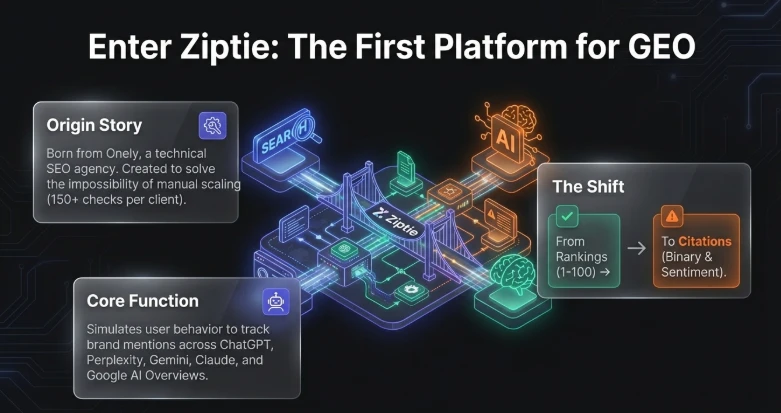
GEO (Generative Engine Optimization) focuses on optimizing content for AI model retrieval and citation rather than traditional search engine rankings. Ziptie is a GEO platform because it measures, analyzes, and guides optimization specifically for how AI models select and present information.
The distinction comes down to the optimization target. SEO tools help you rank on search engine results pages (SERPs). GEO platforms help you get cited in AI-generated responses. The tactics differ significantly because the selection mechanisms are different.
Google’s ranking algorithm evaluates backlinks, domain authority, page speed, and hundreds of other signals to determine which pages should appear in search results. AI models evaluate content clarity, entity recognition, answer directness, source credibility signals, and contextual relevance to determine which sources to cite in generated responses.
Ziptie built its feature set around GEO-specific needs. The automated query generation creates conversational prompts that match how users actually query AI tools—”which email marketing platform has the best automation for nonprofits” rather than keyword-based queries like “best email marketing software.” This distinction matters because AI training focused on natural language, not keyword strings.
The content optimization module in Ziptie analyzes which pages get cited and provides specific recommendations to improve AI citation rates. When testing this on a legal services website, the module identified that their “About Our Law Firm” page was getting cited for personal injury questions because it had clear lawyer credentials and case outcome data. Meanwhile, their actual personal injury service page used vague marketing language and got zero AI citations. Traditional SEO tools never caught this because both pages ranked well for different keywords.
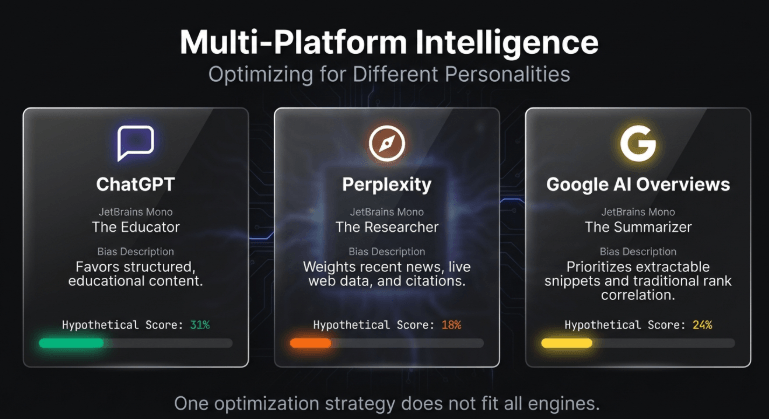
Ziptie also tracks across multiple AI platforms—ChatGPT, Perplexity, Google AI Overviews, Gemini, and Claude—because each AI engine has different source selection biases. ChatGPT favors structured, educational content. Perplexity heavily weights recent news sources. Google AI Overviews prioritize websites already ranking in traditional search. If you optimize only for one platform, you miss citation opportunities on others. A true GEO platform needs multi-engine tracking.
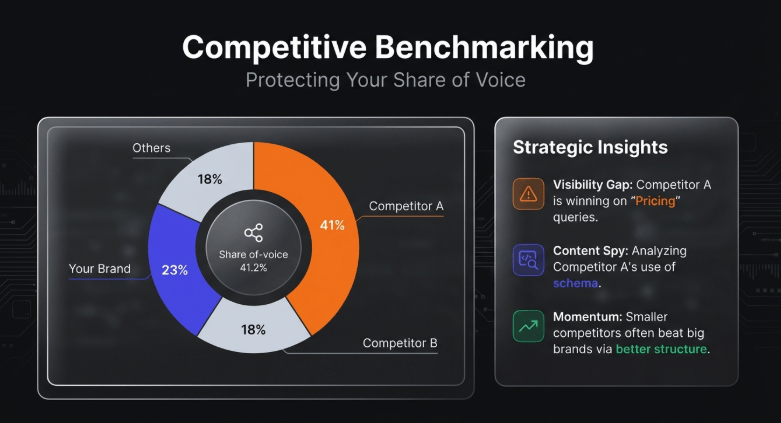
The competitive benchmarking in Ziptie shows relative AI visibility, not search rankings. You can see that your brand appears in 23% of relevant AI queries while Competitor A appears in 41% and Competitor B appears in 18%. This creates a new metric for market share—AI share of voice—that has no equivalent in traditional SEO tools.
There’s a strategic difference too. SEO is defensive—you optimize to maintain or improve existing rankings. GEO is more aggressive—you’re often starting from zero citations and building AI visibility from scratch. Many strong SEO performers have terrible GEO performance because the content strategies that worked for Google’s algorithm don’t match what AI models prefer when constructing answers.
How Has Ziptie AI Evolved From 2024 Launch to 2026 Features?
The initial 2024 version tracked only ChatGPT and Google AI Overviews with manual query input. You had to write your own prompts, run them, and review results individually.
The automation upgrade came first. By Q2 2024, Ziptie added automated query generation that took seed keywords and expanded them into dozens of conversational variations. Instead of manually writing “best CRM software,” “top CRM tools,” “which CRM to choose,” the system generated 50+ natural language queries including long-tail variations like “CRM that integrates with Mailchimp for under $50/month” and “easiest CRM for solo consultants.”
Platform coverage expanded throughout 2024. Perplexity tracking launched in August, followed by Gemini in October. Claude citation tracking was added in January 2025 after anthropic’s search features became prominent. By 2026, Ziptie monitors five major AI platforms, with Mistral and other emerging engines planned for Q2 2026.
The AI Success Score algorithm was refined significantly. The original version simply counted citations (yes/no). The current 2026 version weighs citation position (mentioned first vs. fourth in a list), sentiment context (positive recommendation vs. neutral mention), and answer completeness (full product description vs. passing reference). A citation in ChatGPT’s first sentence of a response now scores higher than a mention buried in paragraph three.
The content optimization module didn’t exist at launch. This was added in Q4 2024 after agency users kept asking “okay, but how do we improve these numbers?” The module now analyzes pages that get cited frequently, identifies common content patterns, and suggests specific structural changes. When one client implemented the recommendations—adding more comparison tables, shortening paragraphs, and including specific pricing—their citation rate increased from 19% to 34% over six weeks.
Competitor tracking got smarter. Early versions required you to manually list competitor domains. The current system suggests competitors based on who appears in your tracked queries, identifies new competitive threats automatically, and shows competitive momentum (who’s gaining AI visibility month-over-month).
Integration capabilities expanded. The 2024 version was standalone. By late 2025, Ziptie added Google Search Console integration to correlate traditional rankings with AI citation rates. The data revealed that many high-ranking pages had low AI citation, while some mid-ranking pages with better content structure performed well in AI results. This insight shifted optimization priorities for content teams.
Export functionality improved dramatically. Initial reports were basic CSV files. Current exports include formatted client reports, executive dashboards showing AI visibility trends, and API access (in beta) for custom data integrations with business intelligence tools.
Multi-country tracking was added in early 2025. The system now runs queries in different languages and tracks regional AI visibility. This matters because ChatGPT in Spanish shows different results than English queries, and brands need visibility across markets where they operate.
The indexing health monitor was integrated in Q3 2025. Ziptie recognized that poor AI citation often correlated with indexing problems—if Google can’t crawl your site properly, AI models also struggle to access your content. The tool now alerts you to crawl errors, sitemap issues, and technical problems that could be suppressing both traditional and AI visibility.
Pricing evolved too. The original flat $99/month plan split into tiered pricing by Q4 2024: Starter at $69/month (one brand, 100 queries), Pro at $159/month (three brands, 500 queries), and Enterprise at custom pricing (unlimited brands, 5000+ queries). This made the tool accessible to smaller businesses while supporting agency-scale needs.
The upcoming 2026 roadmap includes predictive citation forecasting (which content changes will likely improve AI visibility), sentiment analysis improvements (understanding whether citations are positive, neutral, or negative), and white-label reporting for agencies reselling GEO services.
How Does Ziptie AI Track Brand Citations Across ChatGPT, Perplexity, and Google AI Overviews?
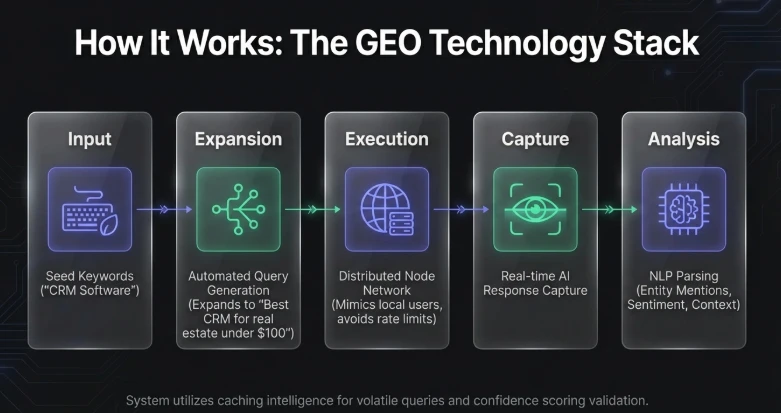
Ziptie sends automated queries to each AI platform, captures the full generated response, and parses the text to identify brand mentions, product references, and contextual citations.
The process starts with query generation. You input seed keywords or topics relevant to your business. Ziptie’s query engine expands these into conversational prompts using natural language patterns. If your seed keyword is “accounting software,” the system generates queries like “which accounting software is best for freelancers,” “compare QuickBooks vs Xero for small business,” “affordable accounting tools with mobile apps,” and 50+ other variations.
The system then executes these queries against each tracked AI platform. For ChatGPT, it uses OpenAI’s API to submit prompts programmatically and capture responses. For Google AI Overviews, it scrapes search results that trigger AI-generated snippets. For Perplexity, it queries through their interface and captures the generated answer plus cited sources. Each platform requires different technical approaches because their APIs and access methods vary.
Capturing the data is just the first step. The harder part is accurate parsing. If ChatGPT generates a 300-word response recommending five project management tools, Ziptie’s natural language processing identifies each brand mentioned, the context of each mention (positive recommendation vs. neutral listing vs. comparison), and the position within the response.
The system handles variations in how brands appear. If your official brand name is “Acme Corporation” but AI platforms cite you as “Acme,” “Acme Corp,” or “Acme project management software,” Ziptie’s entity recognition connects these variations to your brand profile. You configure your brand name and common aliases during setup to improve accuracy.
Citation scoring happens after parsing. A simple mention counts, but Ziptie weights citations based on factors like:
Position: First recommendation in a list scores higher than fifth Context depth: A full feature description scores higher than just a brand name Sentiment: “The best option is X” scores higher than “X is also available” Answer relevance: Citation in a highly relevant query scores higher than tangential mentions
One technical challenge is rate limiting. ChatGPT’s API has usage limits, and repeatedly querying the same prompts can trigger throttling. Ziptie spaces out queries, varies prompt structures slightly to avoid detection as automated traffic, and caches results to minimize redundant requests.
The frequency of tracking depends on your plan. Starter plans track weekly, Pro plans track every three days, and Enterprise plans can run daily monitoring. Each tracking cycle re-runs your full query set and updates citation data. This captures changes when AI models update their training data or when competitors improve their GEO and start appearing more frequently.
For Google AI Overviews specifically, Ziptie uses a different approach because these are query-dependent. It runs actual Google searches for your tracked keywords and checks whether an AI Overview appears in results. If yes, it captures the AI-generated content and analyzes citations. This means Ziptie is actually triggering Google’s algorithm to generate fresh responses rather than just checking static results.
Data aggregation happens after all queries complete. Ziptie calculates your overall AI Success Score (percentage of queries where your brand was cited), competitive share of voice (your citations vs. competitor citations), and trending data (whether your visibility is improving or declining week-over-week).
The system flags anomalies automatically. If your citation rate suddenly drops 40% in one tracking cycle, it alerts you immediately. This could indicate a competitor launched new content, an AI model was updated and changed source preferences, or technical issues on your site are preventing AI access to your content.
What Is the AI Success Score and How Does Ziptie Calculate It?
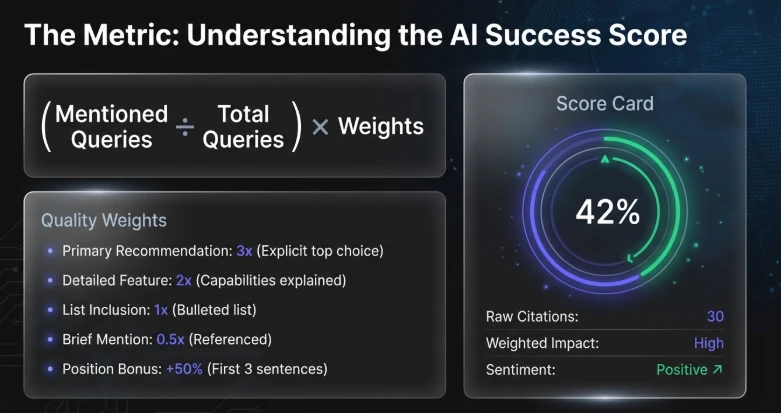
The AI Success Score measures what percentage of relevant AI queries result in your brand being cited. It’s calculated as (queries where you’re mentioned ÷ total queries tracked) × 100.
If Ziptie runs 200 queries related to your industry and your brand appears in 58 of those AI responses, your AI Success Score is 29%. This becomes your baseline metric for tracking GEO performance over time.
The calculation includes weighted factors that make it more sophisticated than a simple citation count. Not all mentions are equal. When Perplexity lists your product first with a detailed description and positive context, that citation counts more than a passing mention in seventh position. The algorithm applies multipliers:
Primary recommendation: 3x weight (when AI explicitly suggests your brand as the top choice) Detailed feature citation: 2x weight (when AI explains your specific capabilities) List inclusion: 1x weight (when your brand appears in a list of options) Brief mention: 0.5x weight (when your brand is referenced but not recommended)
Position within the AI response also affects scoring. The first three sentences of an AI answer receive 50% more weight than citations in the middle or end of the response. This reflects user behavior—most people scan the beginning of AI answers and don’t read entire responses.
Query relevance matters too. Ziptie scores citations in highly relevant queries higher than citations in tangentially related queries. If you sell email marketing software, a citation in response to “best email marketing platforms” scores higher than a citation in “what tools do marketers use” where email marketing is just one category mentioned.
The competitive context adds another layer. If an AI response mentions four competitors and you’re not cited, that query contributes zero to your score. If an AI mentions you plus two competitors, the system notes competitive density and may adjust weighting—appearing among fewer competitors can indicate stronger brand authority for that specific query.
Sentiment analysis is being refined in the 2026 version. The current algorithm can detect clearly positive language (“the best choice is…”) versus neutral mentions (“options include…”), but it still struggles with nuanced criticism. If an AI says “Brand X works well but has limited integrations,” the system counts this as a citation but doesn’t heavily penalize the criticism in scoring. Improved sentiment analysis will adjust scores based on whether citations are beneficial or potentially damaging to brand perception.
One thing the AI Success Score does NOT measure: downstream conversions. Ziptie tracks citation rates, not whether those citations actually drive traffic, signups, or revenue. You need to correlate Ziptie data with your analytics to understand business impact. Some brands with 15% AI Success Scores see strong referral traffic from AI platforms, while others with 40% scores see minimal traffic because the AI citations don’t include links or clear next-step actions.
The score is calculated separately for each AI platform tracked. Your ChatGPT AI Success Score might be 31% while your Perplexity score is 18% because each AI engine has different source preferences. The overall combined score averages across platforms with optional weighting if certain platforms drive more business value for you.
Historical trending shows score changes over time. The dashboard displays your AI Success Score month-by-month so you can see the impact of content optimization, competitive changes, and AI algorithm updates. Most brands see slow improvement (2-4% monthly) when actively optimizing for GEO. Sudden jumps or drops of 10%+ usually indicate major changes—a competitor launched comprehensive new content, an AI model updated its training data, or technical issues affected content accessibility.
How Does Ziptie’s Content Optimization Module Improve AI Citations?
The content optimization module analyzes which of your pages are actually getting cited by AI engines, identifies common patterns in high-performing content, and recommends specific structural changes to boost citation rates.
The first step is connecting your website to Ziptie so it can audit your content. After you add your domain, the system crawls your site (similar to how Screaming Frog works) and maps your page structure. When tracking cycles run, Ziptie not only detects whether your brand is cited but also attempts to identify which specific pages AI engines are pulling information from.
This source identification isn’t always precise because AI platforms often don’t reveal exact sources. But Ziptie cross-references the information in AI responses with your page content to infer likely sources. If ChatGPT mentions specific features of your product that only appear on your “Features” page, that page likely influenced the AI response.
The module then analyzes patterns in pages with high citation rates. Across hundreds of tracked sites, Ziptie has identified content characteristics that correlate with better AI visibility:
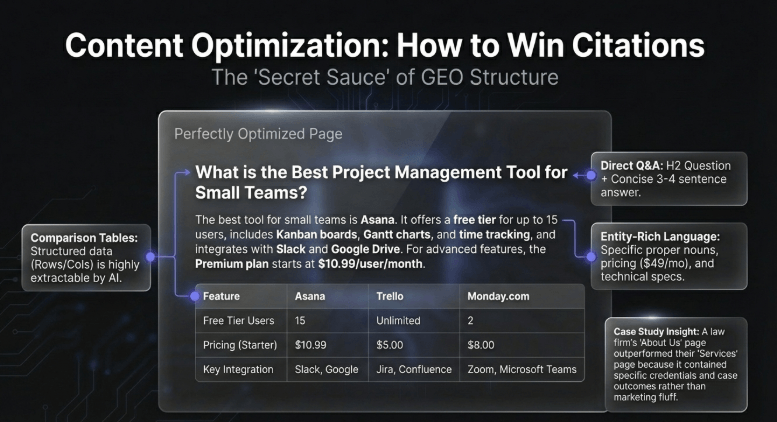
Direct question-answer structure: Pages that pose common questions as H2 headings followed by clear answers get cited 2.3x more than pages with feature lists and marketing copy.
Entity-rich language: Content that includes specific product names, company names, technical terms, and proper nouns gets cited more because AI models rely on entity recognition to understand content context.
Comparison tables: Structured data in tables (feature comparisons, pricing tiers, specification charts) gets pulled into AI responses frequently because it’s easy for models to parse and present to users.
Concise paragraphs: Average paragraph length of 3-4 sentences performs better than long blocks of text. AI models seem to extract information more accurately from shorter, focused paragraphs.
Numeric specificity: Content with specific numbers (pricing, metrics, dates, quantities) gets cited more than vague claims. “Plans start at $49/month” performs better than “affordable pricing.”
The module generates page-level recommendations. After analyzing your site, you get a prioritized list like this:
“Your /pricing page has low AI citation despite strong traffic. Recommendation: Add a comparison table showing your pricing vs. competitors, include specific feature limits for each tier, and restructure with H2 headings that match common pricing questions.”
“Your /features page gets decent traditional traffic but zero AI citations. Recommendation: Break the feature list into separate subsections with H3 headings like ‘How does [feature] work?’ and answer each in 2-3 clear paragraphs.”
One client in the marketing automation space implemented the module’s recommendations on eight pages. The changes included:
- Reorganizing their main product page from marketing copy into FAQ-style sections
- Adding three comparison tables (features, pricing, integrations)
- Shortening paragraphs from 6-7 sentences to 3-4 sentences
- Adding specific metrics and numbers throughout (“connects with 2,000+ apps” instead of “integrates with popular tools”)
After six weeks, their AI Success Score improved from 22% to 38%. More importantly, they started appearing in Perplexity citations for competitive comparison queries where they’d previously been invisible.
The module doesn’t just analyze your own content—it also examines competitor pages that get cited frequently. You can see what content structures your competitors use and how their approach differs from yours. If a competitor’s help documentation gets cited heavily while your marketing pages don’t, that signals a strategic shift in content format might be necessary.
The recommendations are actionable but require manual implementation. Ziptie tells you what to change but doesn’t automatically rewrite your content. This is intentional—automated content generation often lacks the specificity and accuracy needed for strong GEO performance. You need human expertise to implement changes while maintaining brand voice and factual accuracy.
One limitation: the optimization module works best for content-driven websites (blogs, documentation, educational resources, SaaS product pages). It provides less value for e-commerce product pages with minimal text content or image-heavy portfolio sites where AI models have less textual content to extract from.
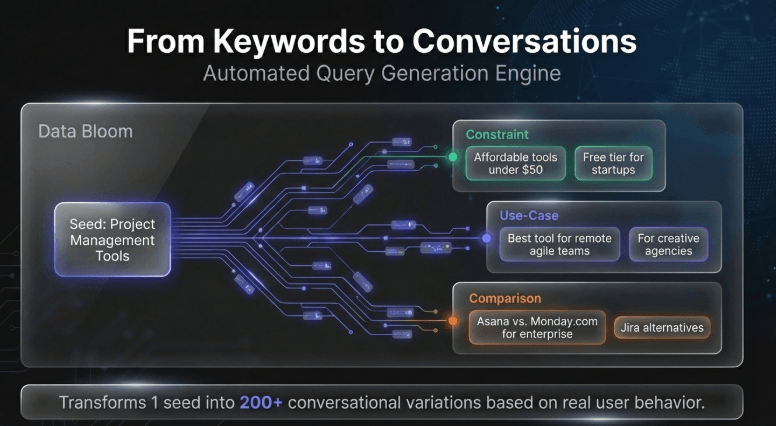
What Is Automated Query Generation and How Does Ziptie Transform SEO Keywords Into AI Prompts?
Automated query generation takes traditional SEO keywords and converts them into natural language questions and prompts that match how real users interact with AI platforms.
The transformation is necessary because people query ChatGPT differently than they query Google. On Google, someone types “best crm software.” In ChatGPT, they ask “which CRM would you recommend for a small real estate team that needs mobile access and costs under $100 per month.”
Ziptie’s query generation engine starts with your seed keywords. You input terms like “project management software,” “email marketing tools,” “accounting software for freelancers,” or whatever keywords are relevant to your business. The minimum recommended is 10-15 seed keywords, though more comprehensive tracking uses 50-100 seeds.
The system then expands each seed keyword into multiple query variations using several techniques:
Question transformation: “CRM software” becomes “What is the best CRM software?”, “Which CRM should I choose?”, “How do I select CRM software?”, “What CRM do experts recommend?”
Use-case specification: Adds specific contexts like “CRM software for real estate agents,” “CRM software for nonprofits,” “CRM software for startups,” “CRM software for enterprise teams.”
Constraint addition: Includes common limiting factors like “affordable CRM software,” “CRM software under $50/month,” “easiest CRM to learn,” “CRM with best mobile app.”
Comparison generation: Creates competitor comparison queries like “Salesforce vs HubSpot,” “compare top 5 CRM platforms,” “which is better Pipedrive or Copper CRM.”
Feature-specific queries: Generates questions about specific capabilities like “CRM with email integration,” “CRM that syncs with Google Workspace,” “CRM with built-in calling features.”
The query generation isn’t random. Ziptie uses its database of real AI queries (anonymized across all users) to understand common phrasings and question patterns. If the system has seen 1,000 real users query AI about CRM software, it knows the most common linguistic structures and incorporates those patterns into generated queries.
The natural language processing ensures queries sound human. Instead of generating “CRM software small business budget” (keyword stuffing), it creates “What CRM software works well for small businesses on a tight budget?” The phrasing matters because AI models are trained on natural human language and may interpret awkwardly phrased queries differently.
You can customize query generation parameters. Settings include:
Query complexity: Simple (short, direct questions), Medium (questions with one constraint), Complex (questions with multiple conditions) Audience specificity: Generic audience vs. specific personas like “for beginners,” “for agencies,” “for enterprise teams” Geographic targeting: Add location-specific queries for local businesses Competitor inclusion: Whether to generate comparison queries mentioning your competitors by name
After generation, you review and approve the query set. The system might generate 200 queries from 20 seed keywords. You can remove irrelevant queries, add custom queries manually, and adjust the mix. This human review is important because fully automated query generation sometimes produces tangentially related questions that don’t actually reflect your target market.
The final query set runs during each tracking cycle. If you’re on a Pro plan tracking every three days, those 200 queries execute against all monitored AI platforms (ChatGPT, Perplexity, Google AI Overviews, etc.) and Ziptie captures citations across all responses.
One practical benefit: query generation reveals gaps in your content. When Ziptie generates 50 use-case-specific queries (“CRM for real estate agents,” “CRM for insurance brokers,” “CRM for financial advisors”) and you realize your content only addresses “CRM for small business” generically, that signals an opportunity to create more targeted content for specific verticals.
The system updates query sets automatically over time. Every 90 days, it suggests new query variations based on emerging search patterns in your industry. If “AI-powered CRM” becomes a trending search term, Ziptie adds queries incorporating that phrase to keep your tracking current.
How Does Ziptie Monitor Site Indexing Health Alongside AI Visibility?
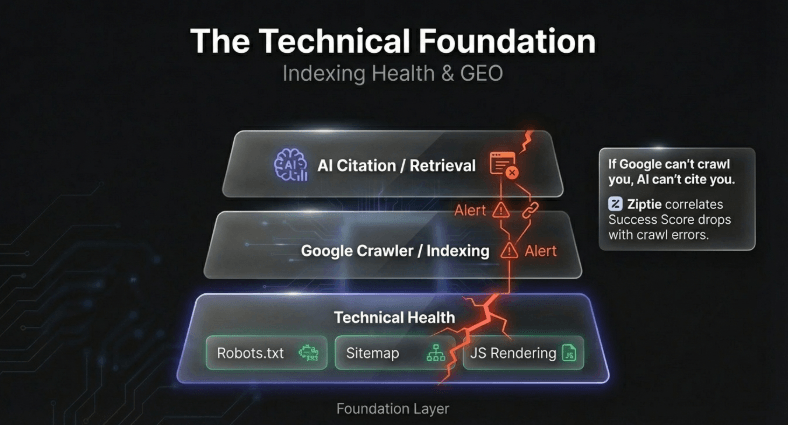
Ziptie includes a technical SEO monitor that checks indexing status, crawl errors, sitemap issues, and other foundational problems that affect both traditional search and AI visibility.
The connection between indexing and AI citations is direct: if search engines can’t properly crawl and index your content, AI models—which often rely on similar access patterns—also struggle to retrieve your information for citations.
The indexing health check runs automatically alongside AI tracking. When you connect your site, Ziptie performs an initial technical audit checking:
Indexing status: How many of your pages are in Google’s index versus how many pages exist on your site. Large discrepancies (site has 500 pages but only 200 are indexed) indicate problems.
Robots.txt issues: Whether your robots.txt file is blocking important content from crawlers. AI platforms generally respect robots.txt, so blocking search engines also blocks AI access.
Sitemap errors: Whether your XML sitemap is accessible, properly formatted, and includes all important pages. Broken sitemaps prevent efficient discovery of new or updated content.
Crawl errors: 404 errors, server errors, redirect chains, and other technical issues that prevent content access. AI platforms attempting to verify information from your site hit the same barriers.
Page speed: Load time problems that cause timeout errors when AI models attempt to fetch content. If a page takes 8 seconds to load, AI systems may abandon the request.
Mobile usability: Since many AI queries happen on mobile devices, mobile rendering issues can affect how AI platforms access and interpret your content.
The monitoring is continuous. After the initial audit, Ziptie checks indexing health weekly and alerts you to new issues. If your robots.txt suddenly blocks important sections (often happens during site updates), you get an immediate notification.
The alerts are prioritized by severity. Critical issues (entire site de-indexed, robots.txt blocking everything) trigger immediate emails. Warning-level issues (some pages have slow load times) appear in the dashboard but don’t generate urgent alerts.
One client discovered through Ziptie that their main blog category was blocked in robots.txt. Traditional rank tracking didn’t catch this immediately because their homepage and product pages still ranked well. But their AI citation rate was 60% lower than expected. After fixing the robots.txt error and requesting re-indexing, their AI Success Score improved from 14% to 27% over four weeks as AI platforms began accessing their full content library.
The system also checks whether pages with high AI citation rates have any technical issues. If your best-performing content has problems, you get prioritized recommendations to fix those pages first. It’s more valuable to fix technical issues on pages that are already getting some AI visibility than to fix problems on pages that aren’t relevant to AI queries anyway.
Google Search Console integration enhances this monitoring. If you connect your GSC account, Ziptie pulls in additional technical data including:
- Core Web Vitals scores for pages with AI citations
- Mobile usability errors specific to high-value content
- Manual actions or security issues that could affect all visibility
- Structured data errors that might reduce entity recognition
The indexing monitor includes a “content freshness” tracker. AI models prefer recent information, especially for queries about current topics. Ziptie flags when important pages haven’t been updated in 6+ months, suggesting freshness updates to maintain or improve AI citation rates.
One limitation: Ziptie’s technical monitoring isn’t as comprehensive as dedicated technical SEO tools like Screaming Frog or Sitebulb. For deep technical audits (JavaScript rendering issues, complex redirect chains, schema validation), you still need specialized tools. Ziptie’s indexing monitor is focused specifically on issues that commonly affect AI visibility, not comprehensive site audits.
The practical value is correlation. When you see your AI Success Score drop, the indexing health dashboard helps diagnose whether technical issues caused the decline versus content or competitive factors. If your score drops 15% and the technical monitor shows new crawl errors started the same week, you have a clear action item.
What Real-Time Data Does Ziptie Capture From AI Search Engines?
Ziptie captures the complete AI-generated response, brand mentions, citation context, competitor references, source links (when provided), query timestamp, and response metadata for each tracked query.
The data capture happens at the moment the AI platform generates its response. For ChatGPT queries, this means sending a prompt through the API and storing the full returned text. For Google AI Overviews, it means capturing the AI-generated snippet that appears at the top of search results. For Perplexity, it captures both the AI-written answer and the list of sources cited.
The full response text is stored because analysis happens post-capture. Ziptie’s natural language processing runs on the stored responses to extract:
Brand mentions: Any reference to your brand name, product names, or company name variations Competitor references: Mentions of competing brands in the same response Citation context: The sentence or paragraph where your brand appears Position analysis: Whether you’re mentioned first, in the middle, or toward the end Sentiment indicators: Words like “best,” “recommended,” “avoid,” “limited” that indicate positive, negative, or neutral framing
One data point that surprises users: source attribution inconsistency. Perplexity consistently lists sources with links. ChatGPT sometimes mentions sources informally (“according to…”) but doesn’t systematically cite URLs. Google AI Overviews link to the websites they pull information from. This variance means Ziptie captures different metadata structures for each platform.
The timestamps are critical for trend analysis. Ziptie logs exactly when each query was executed and when the response was captured. If you’re tracking weekly, you can see how AI responses change over time—whether your brand starts appearing more frequently, whether competitors are gaining visibility, and whether AI platforms are pulling from updated content on your site.
Query metadata includes:
Query text: The exact prompt sent to the AI platform Platform: Which AI engine generated the response (ChatGPT-4, Perplexity, Google AI Overview, etc.) Language: The language the query was executed in (for multi-language tracking) Geographic location: Where the query originated (for location-specific results) Device type: Mobile vs. desktop when relevant (primarily for Google AI Overview tracking)
Response metadata includes:
Response length: Total word count of the AI answer Number of brands mentioned: How many different companies or products were cited Link inclusion: Whether the response included any URLs to sources Media inclusion: Whether the AI response included images or other media (mainly relevant for Google AI Overviews)
Ziptie doesn’t capture user interaction data from AI platforms because that information isn’t accessible. The system doesn’t know if someone asked a follow-up question, clicked on a cited source, or how long they spent reading the AI response. This is a key limitation—you can see citation rates but not engagement rates.
The real-time aspect has limits. For API-based platforms like ChatGPT, data is truly real-time. But for Google AI Overviews, there’s a slight delay because Ziptie must execute actual searches and those results may be cached by Google. The system attempts to vary search parameters to trigger fresh AI generation, but true real-time monitoring isn’t always possible.
Data retention depends on your plan. Starter plans retain 90 days of historical data. Pro plans retain 12 months. Enterprise plans have unlimited retention. This affects how far back you can analyze trends and whether you can compare current performance to your baseline from a year ago.
All captured data is exportable. You can download CSV files with the full dataset—every query, every response, all citations, timestamps, and analysis. This lets you run custom analysis in your own tools or integrate Ziptie data with other business intelligence systems.
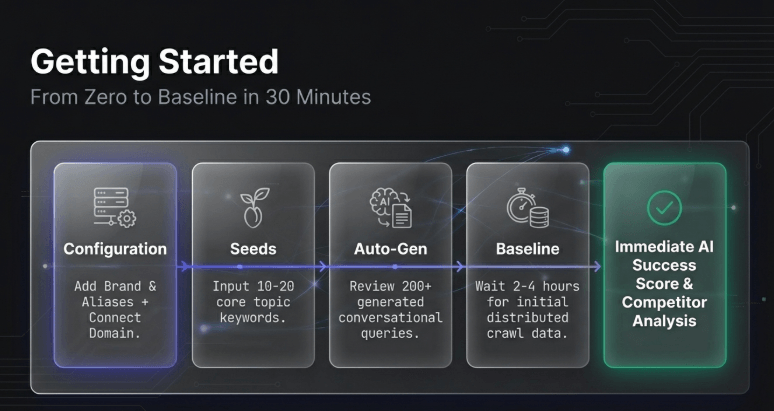
How Do You Set Up Ziptie AI Search Performance Tool in 30 Minutes?
Start by creating an account at ziptie.com. Choose your plan based on tracking needs—Starter ($69/month) for one brand, Pro ($159/month) for up to three brands. You can start with a 7-day free trial to test before committing.
After signup, you land in the onboarding flow. The first step is brand configuration. Enter your brand name exactly as it appears in most content—if you’re “Acme Corporation” officially but most people call you “Acme,” use “Acme” as the primary name. Then add brand aliases: variations like “Acme Corp,” “Acme Software,” or your product names if they’re different from your company name.
Next, connect your website domain. Enter your full domain (acme.com) and Ziptie will verify ownership. The verification happens through one of three methods:
DNS verification: Add a TXT record to your domain DNS (similar to Google Search Console verification). This is the most reliable method but requires DNS access.
HTML file upload: Download a verification file and upload it to your website’s root directory. Works if you have FTP or file manager access but not DNS access.
Meta tag verification: Add a specific meta tag to your website’s homepage header. Easiest if you use a CMS like WordPress where you can edit header code through a plugin.
After verification, you configure your tracking parameters. This is where you input your seed keywords. Start with 10-20 core keywords that represent your main product categories or services. For a project management software company, this might include:
- project management software
- task management tools
- team collaboration platforms
- agile project management
- remote team project tools
Be specific enough to be relevant but broad enough to capture your market. “Software” is too broad. “Project management software for construction companies in Texas” is too narrow. “Project management software” with variations handles the middle ground well.
The system then generates queries from your keywords. Review the suggested query set—typically 100-200 queries from your seed keywords. Remove any that are completely irrelevant to your business. Add custom queries manually if there are specific phrases your target customers use that the auto-generation missed.
Select which AI platforms to track. Options include:
- ChatGPT (GPT-4 and GPT-4o)
- Google AI Overviews
- Perplexity
- Gemini
- Claude (beta)
Track at least three platforms to get meaningful comparative data. Most users enable all available platforms unless budget constraints limit query volume.
Configure tracking frequency based on your plan:
- Starter: Weekly tracking
- Pro: Every 3 days
- Enterprise: Daily tracking available
More frequent tracking provides faster feedback on optimization efforts but uses more query credits.
Set up competitor tracking. Add 3-5 direct competitors by domain name. Ziptie will monitor when these brands appear in AI responses to your tracked queries. Don’t add more than 10 competitors—too many dilutes the analysis and makes the dashboard harder to read.
Enable notifications. Configure email alerts for:
- Significant changes in AI Success Score (10%+ movement)
- New competitors appearing in tracked queries
- Technical issues detected on your site
- Weekly summary reports
The final setup step is optional but recommended: connect Google Search Console. This integration allows Ziptie to correlate traditional search performance with AI visibility, revealing whether high-ranking pages also get AI citations or if there’s a disconnect between SEO and GEO performance.
After setup completes, Ziptie runs an initial tracking cycle. This first run takes 2-4 hours depending on how many queries you’re tracking and which platforms you enabled. You’ll receive an email when initial results are ready.
Your dashboard will now show:
- Current AI Success Score (baseline measurement)
- Citations by platform (which AI engines mention you most)
- Competitor comparison (your visibility vs. competitors)
- Top performing content (which pages get cited)
- Recommended optimizations (content improvements to increase citations)
The entire process from signup to seeing initial results typically takes 30-45 minutes of active time plus 2-4 hours of automated data collection. You don’t need to stay logged in during the data collection—just check back after a few hours for your baseline results.
One mistake to avoid: Don’t configure tracking for overly broad keywords unrelated to your specific offering. If you sell email marketing software, don’t track generic terms like “marketing” or “business software.” The data will be noisy and your AI Success Score will be artificially low because you’re measuring queries where citation would be impossible.
Another common issue: Not configuring enough brand name variations. If AI platforms cite you as “Acme” but you only configured “Acme Corporation,” the system might miss citations. Add every reasonable variation during initial setup.
What Integrations Does Ziptie Offer With Google Search Console and Analytics?
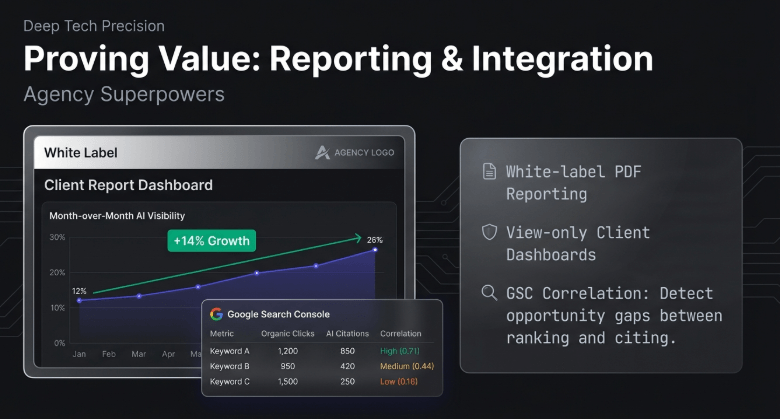
Ziptie currently integrates with Google Search Console and has beta integration with Google Analytics 4. The GSC integration is more mature and provides the most value for correlating traditional SEO with AI visibility.
Google Search Console Integration
Connect your GSC account through OAuth authentication in Ziptie’s integration settings. The system requests read-only access to your search performance data—it can view your data but cannot modify anything in GSC.
Once connected, Ziptie pulls in:
Page-level ranking data: Which pages rank for which keywords in traditional Google search Click and impression data: How much traffic pages receive from organic search
Average position: Where pages rank on average for their tracked keywords Query performance: Which search queries drive traffic to each page
The value comes from correlation analysis. Ziptie’s dashboard shows pages side-by-side with both traditional SEO performance and AI citation rates. Common insights include:
- High-ranking pages with low AI citations (optimization opportunity)
- Mid-ranking pages with high AI citations (strong content structure)
- Pages with good traffic but zero AI visibility (format mismatch)
- New pages that get AI citations before ranking well in traditional search
One client discovered that their FAQ page ranked #8 for most keywords (not great traditional performance) but had a 64% AI citation rate—the highest on their site. The FAQ structure with direct question-answer format was perfect for AI extraction but not optimized for traditional SEO. They created more FAQ-style content, which improved both metrics.
The integration also enables tracking query intent discrepancies. Sometimes traditional search queries differ significantly from how people phrase AI queries for the same topic. GSC shows you’re ranking for “email marketing platform pricing” while Ziptie shows AI users ask “how much does email marketing software cost per month.” This insight helps refine both traditional SEO and GEO content strategy.
Google Analytics 4 Integration (Beta)
GA4 integration is newer and currently in beta testing. The connection process is similar—OAuth authentication with read-only access to your GA4 property.
The integration focuses on traffic source analysis. Ziptie attempts to identify traffic coming from AI platforms by analyzing referral sources and UTM parameters. This is imperfect because:
- ChatGPT doesn’t always include referral information when users click suggested links
- Google AI Overviews traffic appears as Google organic, not separately tagged
- Perplexity citations often don’t include direct links
Despite these limitations, the GA4 integration provides approximate data on:
AI referral traffic volume: Estimated visitors coming from AI platform citations Engagement metrics: How AI-referred traffic behaves (bounce rate, session duration, pages per session) Conversion tracking: Whether AI-referred traffic converts at higher or lower rates than other sources Geographic data: Where AI-referred traffic originates
This data is valuable for justifying GEO investment. If you can show that even a small percentage of AI citations drive high-quality traffic that converts well, it strengthens the business case for continued optimization efforts.
The integration also enables content performance triangulation. You can see:
- Traditional search traffic (from GA4)
- Traditional search rankings (from GSC)
- AI citation rates (from Ziptie)
- AI-referred traffic (from GA4 + Ziptie)
Pages with high AI citations but low AI-referred traffic might indicate that the citations aren’t driving action—users see your brand mentioned but don’t click through. This could mean the citation context is weak or that you need clearer calls-to-action in the content being cited.
Other Integration Capabilities
Ziptie offers Zapier integration for automated workflows. You can set up triggers like:
- When AI Success Score drops 10%, create a task in Asana
- When a new competitor appears in queries, send a Slack notification
- When weekly reports are generated, add data to a Google Sheet
The Zapier integration handles notification and workflow automation but doesn’t enable deep data integration with other analytics platforms.
API access is in private beta for Enterprise customers. The API allows you to:
- Pull Ziptie data into custom dashboards
- Integrate AI visibility metrics into business intelligence tools
- Automate reporting workflows
- Build custom analysis on top of Ziptie’s raw data
If you need API access, you must be on an Enterprise plan and request beta access through support. The API documentation is minimal currently because it’s still being refined based on beta user feedback.
Integration Limitations
Ziptie does not currently integrate with:
- Ahrefs, Semrush, Moz, or other SEO platforms (no data sharing between tools)
- Content management systems like WordPress (no direct content editing)
- CRM systems like HubSpot or Salesforce (no lead tracking integration)
- Social media platforms (no social listening integration despite AI platforms pulling from social sources)
Most of these integrations are on the roadmap but not available in early 2026. The focus has been on getting core tracking functionality right before expanding integration ecosystem.
How Does Ziptie’s Technical Architecture Ensure Accurate AI Tracking?
Ziptie uses distributed query execution, multiple validation checks, and ongoing calibration against manual testing to maintain tracking accuracy.
The distributed query system prevents rate limiting and bot detection. Instead of sending all queries from a single server IP address, Ziptie routes queries through a distributed network of execution nodes. When ChatGPT receives 200 queries from your account, those queries originate from different IP addresses and are spaced across several hours. This mimics natural usage patterns and prevents AI platforms from throttling or blocking the requests.
Query variation is built into the execution. Even though you configure a specific query like “best CRM software,” Ziptie slightly varies the prompt on each execution cycle. One week it might query “What is the best CRM software?”, next week “Which CRM software is best?”, and the following week “Can you recommend the best CRM software?” This serves two purposes: it prevents platforms from flagging repetitive automated queries, and it captures natural variation in how AI responses differ based on minor prompt changes.
The system includes caching intelligence to avoid redundant queries. If you run tracking every 3 days, Ziptie doesn’t re-query every single prompt every cycle. It prioritizes:
- Queries where citation rates have been volatile (indicating active competition or algorithm changes)
- New queries recently added to your tracking set
- Queries that haven’t been refreshed in 7+ days
Stable queries where your citation rate has been consistent for weeks are checked less frequently. This balances accuracy with API cost efficiency.
Validation happens at multiple points. After capturing an AI response, the system runs several checks:
Response completeness: Did the AI platform return a full answer or was the response truncated due to timeout errors?
Brand detection accuracy: The NLP engine identifies brand mentions, then runs a second validation pass to catch variations or misspellings.
Competitive verification: When your brand and competitors both appear in a response, the system verifies relative positioning and context.
Anomaly flagging: If your citation rate suddenly changes dramatically (30%+ shift in one tracking cycle), the system flags for manual review before incorporating into overall scores.
Calibration testing runs continuously. Ziptie maintains a control set of queries that are also manually tested by human reviewers. Each week, a sample of 50-100 queries across all tracked brands is manually executed and compared to automated results. If automated and manual results diverge by more than 5%, the system triggers an investigation and potential recalibration of detection algorithms.
The platform-specific adaptations are important for accuracy. Each AI platform has different response formats:
ChatGPT: Returns structured text with consistent formatting. Brand detection is straightforward.
Perplexity: Includes citation numbers [1][2][3] and a sources list. Ziptie must parse both the main response and the sources list to catch all citations.
Google AI Overviews: Often includes images, snippets, and structured data. The system extracts only the AI-generated text portion, ignoring featured snippets that aren’t AI-created.
Gemini: Response format varies between search integration and direct API. Ziptie handles both modes differently.
Error handling prevents bad data from contaminating results. If a query execution fails (timeout, API error, rate limit hit), that query is marked as failed and retried later. Failed queries don’t count against your citation rate—only successful query executions contribute to scoring.
The system also tracks its own confidence levels. Each citation detection includes a confidence score:
- High confidence (95%+): Clear, unambiguous brand mention
- Medium confidence (80-95%): Likely correct but some ambiguity (e.g., brand name is a common word)
- Low confidence (60-80%): Possible citation requiring human review
Low-confidence detections are flagged in the dashboard. You can review these manually and confirm or reject them. Confirmed corrections feed back into the NLP training to improve future accuracy.
One technical limitation: Ziptie cannot track AI citations that happen in private contexts. If someone queries ChatGPT with “analyze this document” and attaches proprietary data, and ChatGPT mentions your brand in that analysis, Ziptie has no visibility into that interaction. The tool only tracks queries it executes directly, not the entire universe of AI interactions mentioning your brand.
Latency is minimized through parallel processing. When a tracking cycle starts, queries for different platforms execute simultaneously rather than sequentially. If you’re tracking 200 queries across 4 platforms (800 total query executions), that completes in 1-2 hours rather than 6-8 hours sequential processing would require.
Data consistency checks compare results across platforms. If your brand gets cited in 40% of ChatGPT queries but 0% of Perplexity queries for the same query set, the system flags this as unusual. Large cross-platform discrepancies might indicate tracking issues with one platform or genuine differences in how AI models select sources—human review determines which.
What Is Ziptie’s Approach to Multi-Country AI Search Tracking?
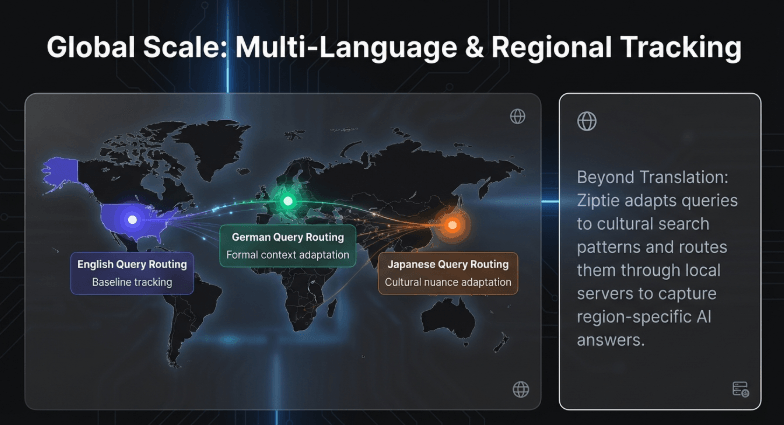
Ziptie handles multi-country tracking by executing queries in different languages and, when possible, from geographic locations relevant to each market.
The language component is straightforward. You configure tracking for multiple languages by adding language-specific query sets. If you operate in the US, UK, Germany, and Japan, you create four separate tracking configurations:
- English queries for US/UK markets
- German queries for German market
- Japanese queries for Japanese market
The system translates your seed keywords into target languages, then generates natural language queries using that language’s linguistic patterns. “Best CRM software” becomes “Beste CRM-Software” in German and “最高のCRMソフトウェア” in Japanese, with appropriate query variations for each language.
One important note: simple translation isn’t enough. Query patterns differ by culture. German business queries tend to be more formal and detailed. Japanese queries often include politeness levels and context that don’t exist in English. Ziptie’s query generation accounts for these linguistic differences rather than just translating English queries word-for-word.
Geographic execution is more complex. Some AI platforms adjust responses based on the query originator’s location. Google AI Overviews definitely do this—searching for “best restaurants” from Tokyo gives different AI-generated results than the same query from New York. ChatGPT and Perplexity show less geographic variation but still have some location awareness.
To handle this, Ziptie routes queries through geographically distributed servers. When executing German market queries, those requests originate from servers in Germany or nearby European locations. Japanese queries route through Asian servers. This increases the likelihood of receiving location-appropriate AI responses.
The geographic routing isn’t perfect because AI platforms’ location detection methods vary. Some platforms check server IP location, others rely on user account settings, and some use a combination. Ziptie can’t perfectly simulate a query from a real user in each target market, but it approximates regional targeting better than running all queries from a single US-based server.
Multi-country tracking reveals important regional differences. One SaaS company tracking in English, Spanish, and French discovered:
- Their English AI Success Score was 34%
- Their Spanish AI Success Score was only 12%
- Their French AI Success Score was 41%
The discrepancy came from content availability. They had comprehensive English content but only minimal Spanish content. Their French content was actually better structured than their English content, leading to higher AI citation rates in that market. This insight drove a strategic decision to either improve Spanish content or deprioritize that market.
Currency and unit conversions are handled automatically. If your product costs “$99/month” and you’re tracking German queries, the content optimization module suggests localizing pricing to “89€/month” because AI platforms serving German users prefer locally relevant information. This localization improves citation rates in international markets.
The system tracks platform availability by region. ChatGPT is available in most countries but has restrictions in some regions. Google AI Overviews rollout varies by country—widely available in the US but limited in many other markets as of early 2026. Ziptie alerts you when platforms aren’t available in your target regions so you can adjust tracking focus.
Language-specific competitive analysis is particularly valuable. Your global competitors might differ from regional competitors. In US English queries, you compete with Salesforce and HubSpot. In Japanese queries, local providers dominate. Ziptie tracks region-specific competitors separately so you understand the competitive landscape in each market.
One limitation: Ziptie doesn’t fully account for cultural context beyond language. AI platforms might cite different types of sources in different cultures. German AI responses might favor highly technical, detailed sources while US responses favor simpler, more accessible content. The tool tracks these patterns but doesn’t automatically adjust optimization recommendations by culture—that requires human interpretation.
Setting up multi-country tracking requires careful query configuration. Don’t just translate English queries literally. Better approach:
- Hire native speakers for each target market
- Have them review generated queries for natural phrasing
- Add market-specific queries that wouldn’t occur in English
- Configure competitive tracking for regional competitors, not just global brands
The cost scales with tracking scope. Each language/region combination counts as a separate brand in your plan limits. If you’re tracking 3 languages, that uses 3 brand slots on a Pro plan. For extensive multi-market tracking, Enterprise plans offer better economies of scale.
How Does Ziptie Handle Data Exports and Reporting for Agency Clients?
Ziptie offers CSV data exports, PDF report generation, white-label reporting (Enterprise plan), and scheduled email reports for client communication.
The CSV export is the most flexible. From any dashboard view, you can export raw data including:
- All tracked queries with timestamps
- Full AI responses captured
- Citation status for your brand and competitors
- AI Success Scores by time period
- Platform-specific performance data
The CSV export includes both summary metrics and granular details. One file might contain thousands of rows if you’re tracking extensively—every query execution becomes a data row. This format works well for agencies that want to build custom analyses in Excel or integrate data into business intelligence tools like Tableau.
PDF reports are pre-formatted for client presentation. You configure report parameters:
Time range: Weekly, monthly, or quarterly reporting periods Brands included: If you’re tracking multiple clients, generate separate reports for each Comparison mode: Your performance vs. specific competitors or vs. industry benchmark Key metrics to highlight: AI Success Score, top-performing content, biggest changes
The generated PDF includes:
- Executive summary (one-page overview of AI visibility status)
- Trend charts (AI Success Score over time, platform-by-platform performance)
- Competitive analysis (your citations vs. competitors)
- Content performance (which pages get cited most)
- Recommendations (specific optimization actions based on data)
The PDF design is professional but generic—Ziptie branding is visible. For agencies reselling GEO services, this creates a branding conflict. That’s where white-label reporting comes in.
White-Label Reporting (Enterprise Only)
Enterprise plans can customize report branding. This includes:
- Replacing Ziptie logo with your agency logo
- Customizing report color scheme to match your brand
- Adding custom cover pages with your agency messaging
- Removing all Ziptie references from report content
The white-label feature is critical for agencies positioning GEO tracking as a premium service. You can charge clients $500-$2,000/month for “proprietary AI visibility monitoring” without explicitly mentioning you’re reselling Ziptie on the backend.
The white-label setup requires submitting your brand assets (logo, colors, fonts) to Ziptie support. They implement the customization within 48 hours. After setup, all reports generated for your agency account use your branding automatically.
Scheduled Reports
Configure automated report delivery on recurring schedules. Options include:
- Weekly reports every Monday morning
- Monthly reports on the 1st of each month
- Quarterly reports with deeper analysis
- Immediate alerts for significant changes (AI Success Score drops 15%+)
Reports deliver via email to specified recipients. For agency use, you can send reports directly to clients or route them to your team first for review and contextual commentary.
One agency workflow: Ziptie sends automated reports to account managers each Monday. Managers review the data, add custom commentary about notable changes and recommended next steps, then forward the enhanced report to clients. This adds human interpretation on top of automated data delivery.
Dashboard Sharing
Instead of exporting reports, you can grant clients direct dashboard access. Create read-only user accounts that see only their brand’s data, not other clients tracked in your Ziptie account. This transparency builds trust and reduces reporting overhead.
The dashboard sharing includes access controls:
- View-only access (can see data but not change configuration)
- Limited time access (e.g., 30-day trial access for prospects)
- Data filtering (client sees only their data, not your full account)
Some agencies prefer this approach because clients can explore data themselves rather than waiting for scheduled reports. The risk is clients might misinterpret data without proper context, so many agencies combine dashboard access with regular consultation calls to review findings together.
API-Based Reporting (Beta)
Enterprise customers in the API beta can pull data programmatically for custom reporting solutions. This enables:
- Integration with your agency’s existing client reporting platform
- Custom dashboard builds that combine Ziptie data with other marketing metrics
- Automated data feeds into client portals
The API approach requires development resources but offers maximum flexibility for agencies with established reporting infrastructure.
Multi-Client Management
Agencies tracking dozens of clients need efficient account management. Ziptie’s agency dashboard provides:
- Quick-switch between client accounts (no logging in/out)
- Bulk operations (run tracking for all clients simultaneously)
- Cross-client comparisons (benchmark one client against others in similar industries)
- Centralized billing (one invoice for all clients, not separate charges per brand)
The multi-client interface saves significant time when you’re managing 20+ brands. You can review all clients’ AI Success Scores on one screen, identify which accounts need attention, and drill into detailed data only for clients with notable changes.
One limitation: Ziptie doesn’t currently integrate with agency project management tools like Workamajig or Function Point. Report generation and data exports are manual or scheduled, not triggered by project milestones in your PM system. This integration is on the roadmap but not available in early 2026.
What Security and Privacy Controls Does Ziptie Provide for Sensitive Brand Data?
Ziptie implements SOC 2 Type II compliant security controls, data encryption at rest and in transit, role-based access controls, and configurable data retention policies.
Data Encryption
All data transmits over TLS 1.3 encrypted connections. When Ziptie queries AI platforms, captures responses, or sends data to your browser, that traffic is encrypted. Man-in-the-middle attacks cannot intercept query data or AI responses.
Stored data is encrypted at rest using AES-256 encryption. This includes:
- Your configured queries and keywords
- Captured AI responses
- Brand mention data and competitive analysis
- User account information and access logs
The encryption keys are managed through AWS Key Management Service (KMS) with automatic rotation every 90 days. Even if someone gained unauthorized access to Ziptie’s database servers, the encrypted data would be unreadable without the encryption keys.
Access Controls
User accounts support role-based permissions:
Admin: Full access to all features, configuration, billing, and user management Editor: Can modify tracking configuration, review data, generate reports Viewer: Read-only access to dashboards and reports, cannot change settings Client: Limited access to specific brand data only, cannot see other tracked brands
For agencies, you typically give your team admin or editor access while providing clients with viewer or client-level access. This prevents clients from seeing sensitive information like which queries you’re tracking or how your tracking is configured.
Multi-factor authentication (MFA) is available for all accounts. Enable MFA through Ziptie settings using TOTP-based authenticator apps (Google Authenticator, Authy, 1Password). MFA is required for Enterprise accounts and strongly recommended for all plans.
Single sign-on (SSO) integration is available for Enterprise customers. Ziptie supports SAML 2.0 SSO through providers like Okta, Azure AD, and OneLogin. This lets large organizations manage Ziptie access through their existing identity management system.
Data Retention and Deletion
Configure how long Ziptie retains your tracking data:
90 days: Minimum retention, included in Starter plans 1 year: Standard for Pro plans Unlimited: Available on Enterprise plans
Custom: Enterprise customers can set specific retention periods
When data ages past your retention period, it’s automatically purged from Ziptie’s systems. The deletion is permanent—data isn’t just archived but completely removed from all database and backup systems.
You can also manually delete data at any time. This includes:
- Deleting specific tracking queries and their captured responses
- Removing entire brands from tracking
- Closing your account and requesting full data deletion
Account closure with data deletion is processed within 30 days. Ziptie removes all your configuration, captured data, and account information. The only exception is billing records, which must be retained for legal and tax compliance (typically 7 years depending on jurisdiction).
Compliance Certifications
Ziptie maintains SOC 2 Type II certification, which verifies that security controls are properly designed and operating effectively. The annual audit covers security, availability, and confidentiality controls.
The platform is GDPR compliant for European users. This includes:
- Data processing agreements available on request
- Right to access your data
- Right to delete your data
- Right to data portability (export your full dataset)
- Privacy impact assessments for high-risk processing
CCPA compliance for California users includes similar rights plus opt-out of data selling (though Ziptie doesn’t sell user data to third parties anyway).
Data Isolation
Tracking data for different brands is logically isolated. If you’re an agency tracking 50 clients, each client’s data is segregated. A security breach affecting one brand’s data doesn’t expose others. Database-level permissions enforce this isolation—queries for Brand A’s data cannot access Brand B’s data even if someone compromised one account.
API Security
For Enterprise customers using the API, security includes:
- API keys instead of passwords for programmatic access
- Key rotation support (invalidate old keys, generate new ones)
- Rate limiting to prevent abuse
- IP whitelisting (restrict API access to specific source IPs)
- Webhook signature verification (confirm webhooks actually came from Ziptie)
Vendor Security
Ziptie relies on third-party services for infrastructure:
AWS (hosting): SOC 2, ISO 27001 certified infrastructure OpenAI (ChatGPT queries): Queries sent to OpenAI’s API are subject to OpenAI’s data policies Google (AI Overview tracking): Search queries subject to Google’s terms of service Anthropic, Perplexity (other AI platforms): Each has their own data handling policies
One privacy consideration: when Ziptie sends queries to AI platforms on your behalf, those platforms log the queries according to their own policies. Your tracking queries become part of those platforms’ usage data. For most businesses this isn’t a concern, but if you’re tracking highly sensitive queries (medical conditions, financial products with regulatory constraints), be aware that those queries are visible to the AI platform providers.
Ziptie itself doesn’t use your tracking data to train AI models or share it with third parties for any purpose. Your queries, captured responses, and competitive data remain private to your account.
Incident Response
If Ziptie detects a security incident, their incident response protocol includes:
- Immediate notification to affected customers within 24 hours
- Detailed incident report including what data was potentially exposed
- Remediation steps taken to address the incident
- Recommendations for customer actions if needed
The incident response plan is tested annually through simulated breach exercises. Contact information for security reports is published at ziptie.com/security.
One gap: Ziptie doesn’t currently offer customer-managed encryption keys. All encryption uses Ziptie-managed keys. For organizations requiring customer-managed encryption (common in healthcare and finance), this is a limitation. Customer-managed keys are on the Enterprise roadmap but not available in early 2026.
Why Is AI Search Visibility Critical for Brand Reputation in 2026?
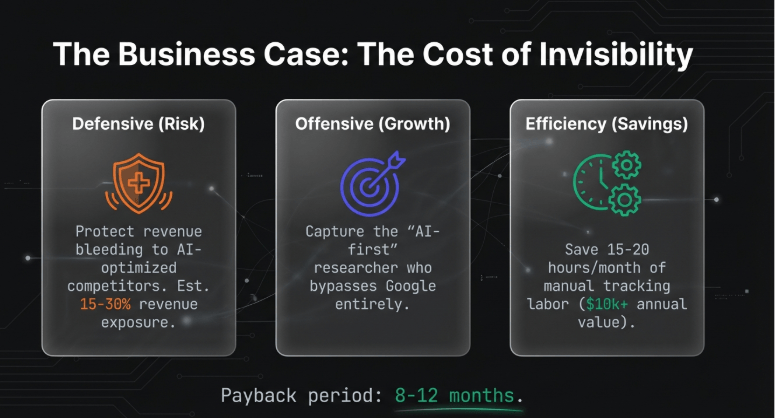
AI platforms are now primary research sources for purchase decisions, career information, health guidance, and product comparisons. If your brand isn’t cited in AI-generated answers, you don’t exist to the growing segment of users who rely entirely on AI for information.
The shift happened faster than most marketing teams anticipated. In 2023, ChatGPT was a novelty. By mid-2024, it had 200+ million weekly active users. Google integrated AI Overviews into search results, meaning even people who never consciously chose to use AI were seeing AI-generated answers. Perplexity, Claude, and other AI search tools gained tens of millions of users. By 2026, AI-assisted search represents 30-40% of all information retrieval across major platforms.
The reputation impact comes from omission. When someone asks ChatGPT “what are reputable CRM platforms for small businesses” and your product doesn’t appear in the response, you lost a potential customer. But more significantly, that person now associates “reputable CRM platforms” with the brands that were mentioned. The absence creates implicit negative positioning—if you’re not listed among reputable options, users subconsciously categorize you as less reputable.
This effect compounds over thousands of queries. Every time your competitor gets cited and you don’t, that’s a micro-moment of brand building for them and brand erosion for you. Traditional SEO had a similar dynamic, but AI search amplifies it because users see fewer options. A Google search results page might show 10 options on page one. A ChatGPT response typically mentions 3-5 options. The visibility threshold is higher and the stakes are larger.
The narrative control aspect is even more critical. AI platforms don’t just list brands—they characterize them. ChatGPT might describe your competitor as “the best option for enterprises needing advanced automation” while characterizing your product as “a budget alternative for small teams.” Both are citations, but the positioning is dramatically different. Without active GEO work, you have no influence over how AI platforms frame your brand.
One healthcare company discovered this risk when they manually tested medical AI tools. For queries about their specialty area, AI platforms consistently cited competitor research while ignoring their published studies. The AI-generated answers weren’t factually wrong, but they positioned competitors as the authoritative sources in that medical specialty. This affected not just consumer perception but also physician referral patterns—doctors using AI research tools were encountering competitor names repeatedly while rarely seeing this company mentioned.
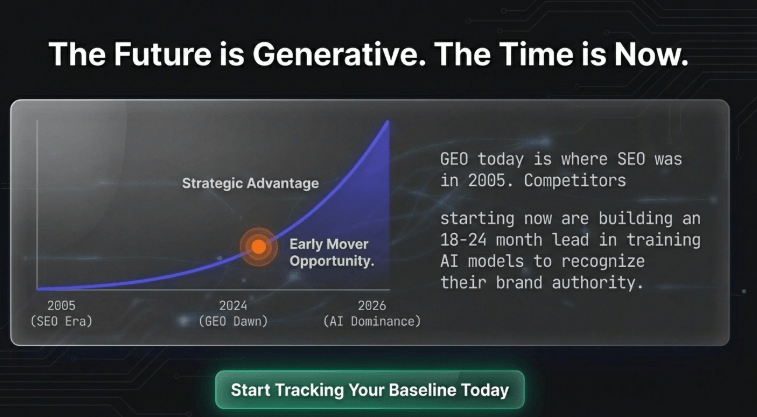
The verification loop creates longer-term reputation effects. When AI platforms cite a brand frequently, they’re often pulling from websites, research papers, and news articles about that brand. This citation frequency signals to the AI models that this is an authoritative source, creating a reinforcing loop. Brands with high current AI visibility tend to maintain or increase that visibility over time. Brands with low visibility struggle to break into AI citations even when they produce good content, because the models haven’t learned to recognize them as authoritative sources.
There’s also a trust transfer happening. Users increasingly trust AI-generated answers more than traditional search results because AI platforms present information with confidence and narrative structure. When Claude says “the best project management tool for remote teams is X,” users weight that recommendation more heavily than if they had found X’s website through a Google search. The AI platform’s credibility transfers to the cited brand.
Negative visibility is another dimension. AI platforms sometimes mention brands in neutral or negative contexts. If common user queries about your product category include questions about problems or limitations, and AI responses cite your brand specifically when discussing those issues, you have a negative AI visibility problem. One software company found that ChatGPT consistently mentioned their product when users asked about “difficult onboarding” and “complicated interfaces”—both true criticisms but now amplified by AI citation.
The accessibility of AI search changes the audience. Traditional search required active research—typing queries, clicking through results, evaluating websites. AI search lowers the barrier. Voice queries to ChatGPT, conversational follow-up questions, and AI integration into daily workflows mean people are conducting research in moments where they previously wouldn’t have searched at all. Your brand needs visibility in these micro-research moments that now shape perception.
For B2B companies, AI search visibility affects sales cycle efficiency. When prospects research vendors, they increasingly start with AI queries rather than Google searches or analyst reports. If your brand appears consistently in AI-generated vendor comparisons with accurate, positive positioning, prospects enter sales conversations pre-qualified and favorably disposed. If you’re absent from AI citations, prospects either don’t know you exist or need extensive education about your relevance, lengthening sales cycles.
The institutional knowledge problem is emerging. New employees at companies increasingly use AI tools to learn industry context, understand product categories, and research vendors. If your brand isn’t cited in these educational AI responses, you’re being systematically excluded from the institutional knowledge of entire organizations. This affects brand awareness at a structural level—not just with individual decision-makers but with entire teams and departments learning your industry.
One final angle: AI search visibility affects hiring and partnerships. When potential employees research companies, when potential partners evaluate collaboration opportunities, and when investors assess markets, they’re using AI tools. Your AI visibility shapes how all these constituencies perceive your brand’s market position and relevance.
The timeline matters. Building AI visibility takes months of consistent GEO work. Starting AI visibility optimization in 2026 means you might achieve meaningful citation rates by late 2026 or early 2027. Competitors who started GEO work in 2024 already have 18-24 months of advantage. The reputation gap widens while you’re building initial AI presence.
How Much Revenue Are You Losing by Not Tracking AI Overview Citations?
The revenue impact depends on your industry, average customer lifetime value, and how much of your target market uses AI search tools. For most B2B companies with products in competitive categories, the revenue exposure is likely 15-30% of acquisition-related revenue.
Here’s the framework for calculating potential revenue loss:
Step 1: Estimate your AI-reachable market
Take your total addressable market and estimate what percentage now uses AI search tools during research. For tech-savvy audiences (software buyers, marketers, developers), this might be 40-50%. For less digital-native audiences (traditional manufacturing, local services), it might be 15-20%.
If your TAM is 100,000 potential customers and 40% use AI search tools, that’s 40,000 people making purchase decisions with AI assistance.
Step 2: Assess your current AI visibility
Without tracking, most brands have weak AI visibility unless they’ve specifically optimized for it. The average AI Success Score for brands not actively doing GEO is around 12-18%. This means your brand appears in only 12-18% of relevant AI queries.
Your competitors who are optimizing for GEO likely have 30-50% AI Success Scores. This creates a visibility gap.
Step 3: Calculate visibility-driven loss
Of the 40,000 AI-using potential customers, assume 30% conduct their initial research through AI search (the rest use traditional methods). That’s 12,000 people whose first exposure to your product category happens through AI-generated recommendations.
If competitors appear in 40% of those AI responses and you appear in only 15%, you’re visible to 1,800 of these prospects while competitors reach 4,800. The visibility gap is 3,000 prospects who encounter competitors first and may never discover your brand.
Step 4: Convert to revenue impact
Apply your typical conversion rate. If 5% of prospects who discover your brand eventually convert, you’re losing:
- 3,000 lost prospects × 5% conversion = 150 lost customers
- 150 lost customers × $5,000 average deal size = $750,000 annual revenue impact
- For SaaS products with multi-year LTV, multiply by 3-5 years = $2.25M – $3.75M lifetime value loss
This is annualized loss. Each year of inaction accumulates additional loss as AI search usage grows.
Real Example
A marketing automation company tracked this analysis:
- $150K average customer lifetime value
- 2,500 qualified prospects enter their funnel annually
- Estimated 35% of these prospects used AI search during evaluation
- Their AI Success Score was 9% (appearing in very few AI queries)
- Top competitor’s AI Success Score was 47%
The visibility gap meant competitors got cited 5x more frequently in AI-driven research. When they surveyed lost deals, 23% of prospects mentioned they “hadn’t considered” this company during evaluation—these prospects went straight to brands AI tools recommended.
Estimated annual revenue impact: $8-12M in lost opportunities directly attributable to AI visibility gap. This company immediately invested $150K annually in GEO optimization including Ziptie tracking, content restructuring, and ongoing optimization. Within 8 months their AI Success Score improved to 28%, recovering an estimated $3-4M in annual opportunity value.
The Compounding Effect
Revenue loss compounds because AI visibility affects brand awareness broadly. Prospects who don’t encounter your brand in AI searches aren’t just lost deals—they’re lost from your entire consideration set. They’re not signing up for your email list, following your social media, or attending your webinars. You lose multiple future opportunities, not just one transaction.
The inverse is also true: improving AI visibility creates compounding gains. Prospects who discover your brand through AI citations often engage across multiple channels, expanding your total reachable audience.
Industry Variations
Revenue impact varies significantly by industry:
High impact industries (30-50% revenue exposure):
- Software and SaaS
- Professional services (consulting, agencies)
- Digital products and courses
- Technology hardware with complex specifications
- Healthcare and medical devices (due to AI research usage by medical professionals)
Medium impact industries (15-30% revenue exposure):
- E-commerce and retail
- Financial services and insurance
- Real estate and property management
- Education and training services
- B2B services with online research behavior
Lower impact industries (5-15% revenue exposure):
- Local services with primarily offline customer acquisition
- Industrial manufacturing with established vendor relationships
- Government contractors with RFP-based sales
- Industries with long, relationship-driven sales cycles not influenced by online research
Even in lower-impact industries, the trend is upward. AI search usage grows monthly, and revenue exposure increases correspondingly.
The Cost of Delay
Every quarter without AI visibility tracking and optimization creates permanent opportunity loss. You can’t recapture the prospects who researched your product category in Q1 2026, found only competitors cited by AI tools, and made purchase decisions without considering your brand. Those deals are closed.
The strategic question isn’t whether AI visibility affects revenue (it does), but whether the revenue impact justifies the investment in GEO optimization. For most companies where AI-using audiences represent more than 20% of TAM, the investment payback period is measured in months, not years.
What Is the Business Case for Investing in Ziptie AI Search Performance Tool?
The business case centers on three quantifiable benefits: revenue protection (preventing loss to better-optimized competitors), revenue growth (capturing additional AI-driven opportunities), and operational efficiency (reducing manual AI tracking effort).
Revenue Protection – The Defensive Case
If your competitors are optimizing for AI visibility and you’re not, you’re losing market share invisibly. Traditional SEO metrics won’t show this decline because it’s happening in AI platforms you’re not tracking.
Calculate the defensive value using the revenue loss framework above. If untracked AI visibility gaps create $500K-$2M in annual revenue exposure, and Ziptie costs $2K-$20K annually depending on your plan, the ROI is clear: spend $10K to protect $500K-$2M in revenue.
The defensive case alone justifies investment for most B2B companies with >$5M annual revenue where AI search is relevant to the buying journey.
Revenue Growth – The Offensive Case
Beyond defending current position, GEO optimization enables growth into AI-driven channels. As AI search usage increases, brands with strong AI visibility capture disproportionate share of new market entrants.
Quantify the growth opportunity by estimating market expansion into AI-driven research:
- Current annual growth in AI search usage: 20-30% year-over-year
- If AI search currently influences 30% of your prospects, that grows to 36-39% next year
- Strong AI visibility (40%+ Success Score) could capture 60% of this growth vs. 20% with weak visibility
- Additional growth opportunity: 6-9% more prospects reached × your typical funnel conversion × deal size
For a company with $10M annual revenue, 40% from new customer acquisition, this might represent $200K-$400K additional revenue annually from improved AI visibility—all net new growth, not just protecting existing revenue.
Operational Efficiency
Before Ziptie, agencies and in-house teams tracked AI visibility manually. The process involved:
- Manually querying ChatGPT, Perplexity, Google with hundreds of prompts
- Documenting responses in spreadsheets
- Searching through responses for brand mentions
- Comparing competitor citations
- Calculating visibility metrics manually
- Time investment: 15-20 hours per month per brand
At $75/hour loaded cost for marketing staff, this is $1,125-$1,500 monthly in labor cost just for tracking. Ziptie at $69-$159/month provides better data (automated, consistent, historical trending) while saving 90% of the labor cost.
For agencies tracking multiple clients, the efficiency gain is even more significant. Tracking 10 clients manually would require 150-200 hours monthly ($11,250-$15,000 in labor cost). Ziptie Pro at $159/month ($1,908 annually) saves $133,000+ in annual labor cost while providing superior data.
Cost-Benefit Summary
For a typical mid-market B2B company:
Costs:
- Ziptie Pro: $1,908/year ($159/month)
- Content optimization effort: $15,000-$30,000/year (writing, restructuring, technical implementation)
- Total investment: $17,000-$32,000 annually
Benefits:
- Revenue protection: $300K-$1M (preventing loss to competitors with better AI visibility)
- Revenue growth: $100K-$500K (capturing AI-driven opportunities)
- Labor efficiency: $10K-$15K (automated tracking vs. manual process)
- Total value: $410K-$1.5M annually
Even using conservative assumptions (lower-end benefits), the ROI is 12-24x. This makes GEO optimization one of the highest-ROI marketing investments available.
Payback Period
Most companies see measurable improvement in AI Success Scores within 3-6 months of starting optimization. Revenue impact lags by an additional 2-3 months as improved AI visibility translates to prospect behavior changes.
Realistic payback timeline:
- Months 1-3: Baseline tracking, content optimization, initial improvements
- Months 4-6: AI Success Score increases 10-20 points
- Months 7-9: Measurable increase in AI-driven traffic and inquiries
- Months 10-12: Revenue impact becomes clear in closed deals
The investment pays back within 8-12 months for most companies, with ongoing positive returns as AI visibility compounds.
Strategic Value
Beyond immediate ROI, Ziptie provides strategic advantages:
Competitive intelligence: Understanding competitor AI visibility reveals their GEO strategies and identifies weaknesses you can exploit.
Content strategy guidance: Knowing which content formats and topics drive AI citations shapes your content roadmap more effectively than traditional SEO alone.
Market positioning insights: How AI platforms characterize your brand reveals perception gaps and positioning opportunities.
Future-proofing: As AI search continues to grow, early optimization builds compound advantages that are harder for late entrants to overcome.
These strategic benefits are harder to quantify but materially affect long-term market position.
When the Investment Doesn’t Make Sense
Ziptie and GEO investment aren’t appropriate for every business:
- Local service businesses with entirely offline customer acquisition
- Businesses with fully captive/referred customers (government contractors, regulated industries with mandatory vendor lists)
- Very early-stage startups with no existing content and limited marketing budget
- Businesses where target audience doesn’t use AI search (some elderly demographics, low-tech industries)
For these scenarios, focus on fundamentals (website, basic SEO, customer service) before investing in specialized GEO optimization.
The Cost of Not Investing
The counterfactual matters: what happens if you don’t invest in AI visibility tracking and optimization?
- Competitors gain compounding AI visibility advantages
- Your brand becomes increasingly invisible to AI-using prospects
- Revenue flows toward better-optimized competitors
- When you eventually invest (because AI search will continue growing), you’ll be 18-24 months behind competitors who started earlier
The opportunity cost of delayed investment often exceeds the direct cost of the investment itself. This creates a strategic imperative: start tracking and optimizing now, even if initial ROI seems uncertain, because delayed action creates permanent disadvantages in a rapidly-growing channel.