


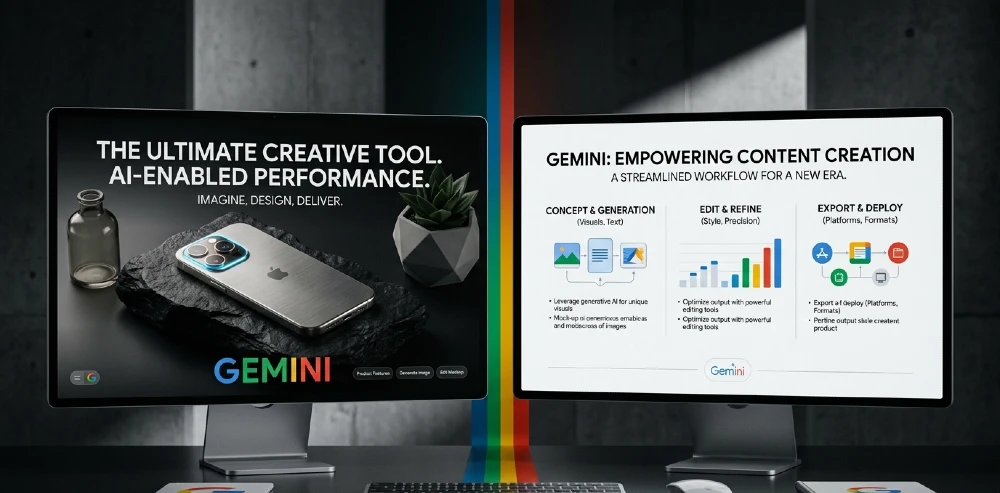
Google’s Nano Banana 2 just delivered numbers the AI image generation market hasn’t seen before. Since launching on February 26, 2026, the model — officially built on Gemini 3.1 Flash Image — has facilitated over 200 million image edits and brought more than 10 million new users directly into the Gemini ecosystem. That isn’t organic growth over a year. That happened in weeks.
For context: this is the same model that started as an anonymous entry on AI evaluation platform LMArena back in August 2025 before anyone knew what it was. Users rated it highly. It went viral. Then Google confirmed it. Now it’s the default image model across Gemini’s Fast, Thinking, and Pro modes — and it’s moving into Google Search, Google Ads, and Vertex AI for enterprise deployment.
What Nano Banana 2 Actually Is (And Why the Name Stuck)
Nano Banana is Google’s name for Gemini’s native image generation capabilities. The nickname originated from the nickname given to Naina Raisinghani, a Product Manager at Google DeepMind, while the model was undergoing anonymous public testing. It stuck because the community latched onto it before the official announcement came.
There are now three distinct models in the Nano Banana family: Nano Banana 2 (Gemini 3.1 Flash Image Preview), built for speed and rapid generation; Nano Banana Pro (Gemini 3 Pro Image), designed for professional asset production with advanced reasoning; and the original Nano Banana (Gemini 2.5 Flash Image), optimized for high-volume, low-latency tasks.
Nano Banana 2 is not just a faster version of Pro. It combines the advanced world knowledge, quality, and reasoning of Nano Banana Pro with the lightning-fast speed of Gemini Flash — delivering high-quality image generation and faster editing in a single model. The key upgrade isn’t raw resolution. It’s what the model can do while being fast.
The 200 Million Image Stat: What It Actually Means
According to Google, Nano Banana helped attract over 10 million new users to the Gemini app and facilitated more than 200 million image edits within weeks of launch. That figure includes edits — not just new generations. Users are uploading photos, changing hairstyles, swapping backgrounds, blending styles, and iterating across sessions. The model’s subject consistency is a big driver of this: when tested with personal photos, the model preserved facial features with 95%+ accuracy, even when changing hairstyles, outfits, or backgrounds.
This is what drove the viral loop. People were generating photorealistic “3D figurine” versions of themselves, changing outfit styles in product photos, and building marketing mockups with accurate text — all in the same session, without losing the original subject’s identity across edits. That behavior is new. Most previous image generators reset the visual context on every new prompt.
The Four Features Driving Real Usage
1. Real-time web knowledge Nano Banana 2 pulls real-time information from Gemini for more accurate renderings of specific subjects. If you prompt it to create a marketing visual referencing a current product, trend, or real-world location, the model pulls live web context rather than relying solely on training data. Tested with prompts referencing February 2026 events, Nano Banana 2 accurately incorporated current information — this is unique among AI image models and eliminates training data staleness.
2. Precision text rendering Text inside AI-generated images has been a persistent failure point across the industry for years. Nano Banana Pro achieves 94% text accuracy, and Nano Banana 2 maintains high text fidelity at faster generation speeds — making it genuinely viable for marketing mockups, infographics, greeting cards, and ad creatives with legible copy. It also supports in-image text translation and localization, allowing text within images to be generated in multiple languages.
3. 4K output with extreme aspect ratios Nano Banana 2 supports image resolution ranging from 512px to 4K, across different aspect ratios. Extreme aspect ratio support — including 8:1 and 1:8 — is genuinely useful for website headers and vertical mobile designs, and no competitors offer this natively. For content teams producing assets across multiple platforms simultaneously, this removes the need for external resizing tools.
4. SynthID + C2PA Provenance Every image carries Google’s invisible SynthID watermark. Since its launch in November, the SynthID verification feature in the Gemini app has been used over 20 million times, helping people identify AI-generated images, video, and audio. C2PA Content Credentials — a standard backed by Adobe, Microsoft, Google, OpenAI, and Meta — are also being added, giving each image a verifiable origin record.
Nano Banana 2 vs DALL-E vs Midjourney vs Runway ML: The Honest Comparison
This is where most articles give vague answers. Here are verified benchmarks.
Speed: Nano Banana 2 is 2.9x faster than Nano Banana Pro and 6.3x faster than Midjourney v6 at 4K resolution. For workflows requiring rapid iteration — A/B testing ad creatives, client revision rounds, high-volume social content — this speed gap is operationally significant, not just a spec sheet advantage.
Artistic quality: Midjourney remains the undisputed champion of pure artistic creation with unmatched imagination and richly detailed, atmospheric visuals. Nano Banana 2 doesn’t beat Midjourney on creative depth. It beats it on speed, subject consistency, text rendering, and practical editing — which are the more commercially relevant capabilities for most marketing teams.
Prompt accuracy: DALL-E gives precision; Midjourney gives creative freedom; Nano Banana tries to merge both — strong editing with speed, less of the steep learning curve, but not always the wildest style output.
Overall benchmark ranking: Nano Banana 2 leads the Elo rankings at 1,360, significantly exceeding Midjourney’s rating in overall user preference rankings, with GPT Image 1.5 at 1,264 and FLUX.2 Pro at 1,265. Elo scores here come from crowd-sourced head-to-head evaluations — the same methodology used to surface Nano Banana’s quality before Google publicly confirmed it.
Runway ML: Runway’s strength is video generation, not static images. Runway AI is the go-to choice for video-first creators. While it handles images well, its real strength lies in AI-powered video generation and editing. Using Runway to benchmark against Nano Banana 2 on static image quality is comparing the wrong use cases. For viral social posts that are video-first, Runway still leads. For ad creatives, SEO images, and marketing visuals that are static, Nano Banana 2 is faster and cheaper.
Limitations that matter: Nano Banana 2 generates one image at a time — unlike Midjourney and Nano Banana Pro, which generate four images per prompt. For exploration workflows requiring option comparison, this slows things down. The model is not very strong at generating completely creative and artistic images from scratch. For fantasy landscapes, mythical scenes, or heavily stylized concepts, Midjourney or Stable Diffusion remain better choices.
What This Means for Marketers and Ad Creative Teams
The practical implication is straightforward. Nano Banana 2 is rolling out across Google products including Gemini, Search, and Google Ads. That last point matters. Integration into Google Ads means marketers will soon be able to generate campaign visuals directly inside the Ads interface — without exporting from a separate tool, without format conversion, without manual resizing.
For SEO image creation, the model’s real-time web knowledge means it can generate contextually accurate visuals tied to current events, seasonal trends, or specific product references — reducing the disconnect between editorial content and AI-generated images that has limited adoption until now.
API pricing for developers: Standard resolution (1000px) costs $0.0672 per image. Mid-tier resolution (2000px) runs $0.101. Maximum resolution 4K is $0.151. Compared to Nano Banana Pro’s $0.24 per 4K image, switching to Nano Banana 2 delivers approximately a 37% cost reduction for 4K outputs, with near-identical visual quality for most use cases.
What’s Next
Nano Banana 2 is already live in Google AI Studio, Vertex AI for enterprise, Google Antigravity, and Firebase. The Gemini app rollout is expanding globally, with early adoption concentrated in markets like India — where the original Nano Banana drove particularly strong uptake on its August 2025 launch.
The next visible development to watch: C2PA verification coming to the Gemini app, which will allow anyone viewing an image to check its AI origin — a step toward the content authenticity infrastructure the industry has needed since generative images became mainstream.
Google isn’t chasing Midjourney’s artistic market. It’s building image generation into the infrastructure layer of its entire product suite — search, ads, productivity tools, and developer APIs. The 200 million image figure is less a vanity metric and more a signal that this strategy is already working.
Check latest news about: Perplexity Personal Computer: Local AI Agent on Mac Mini
