


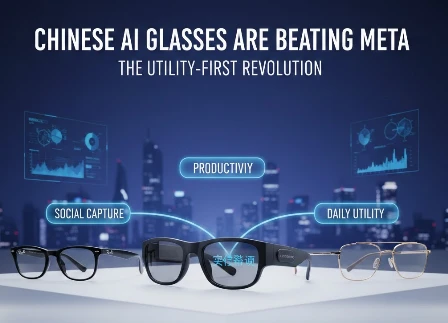
The “camera-first” era of smart wearables is hitting a wall as users realize that recording everything isn’t the same as knowing anything. While Meta remains the king of the “Creator” niche with its Ray-Ban Gen 2, Chinese innovators like Lenovo, Rokid, and Xiaomi have pivoted to a utility-first narrative, delivering ultra-bright displays and 38g frames that act as digital coworkers rather than just hands-free GoPros. This shift is not about who can record the best 60-second reel, but who can provide the most value to a professional who needs their hands free and their eyes informed.
The Smart Wearable Hierarchy
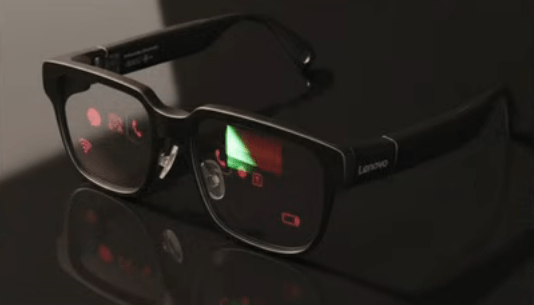
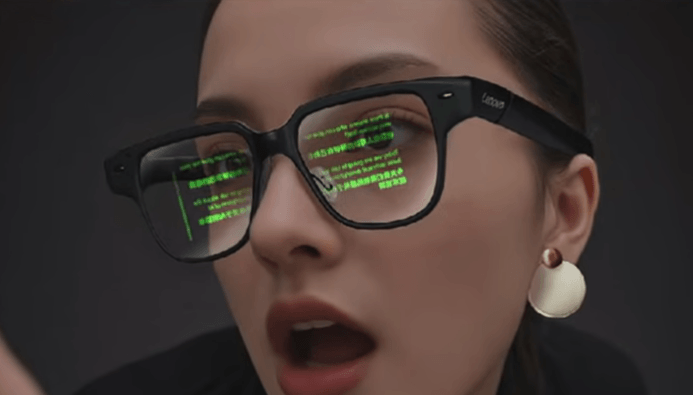
- Lenovo AI Glasses V1 are the only choice for high-intensity work; the 2,000-nit micro-LED display provides a level of visual clarity for real-time translation and teleprompters that Meta’s audio-only approach cannot match.
- Rokid AI Glasses Style (38.5g) are significantly lighter and look more “human” than Meta’s bulkier frames, utilizing a dual-chip system (NXP + Qualcomm AR1) to achieve a 12-hour battery life.
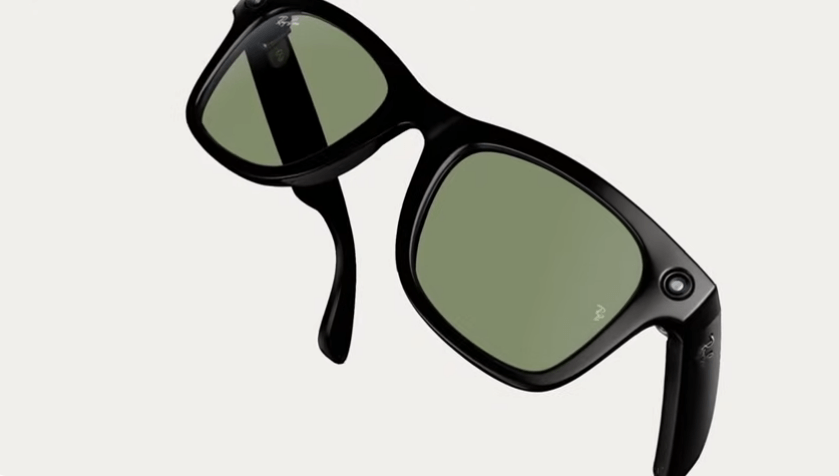
- Meta Ray-Ban Gen 2 still leads in global social media integration (Instagram/WhatsApp) and video stabilization, but they remain “blind” devices that force you to rely on audio cues.
If you are a business owner looking to scale, you must first verify your infrastructure. Use this AI readiness checklist for small business to identify gaps before you waste capital on the wrong tech stack.
Why Silicon Valley is Falling Behind in the Wearable Race
The current market is witnessing a massive divergence in engineering philosophy. Meta’s strategy has focused heavily on acquisition and “Creator” tools, which works for influencers but fails the average professional.
While the focus in Menlo Park is on the “Metaverse,” Chinese manufacturers are solving real-world problems by integrating their hardware into SmartCity design manifestation projects. These devices aren’t just gadgets; they are interfaces for a world where digital data is layered onto physical reality.

In my experience testing these tools, Meta’s glasses feel like a tech product trying desperately to be a fashion accessory. In contrast, the Rokid AI Glasses Style feel like high-end eyewear that happens to have a Sony 12MP sensor tucked away.
The difference is in the weight distribution; Meta’s frames sit heavy on the bridge of the nose, whereas the 38g Lenovo and Rokid models use advanced resin diffraction waveguides to keep the optics thin and the weight balanced.
The Reality of “Agentic” Intelligence in Wearables
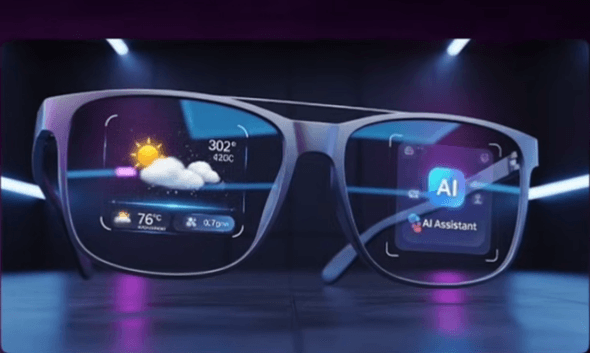
A major differentiator in 2026 is the choice of intelligence. Meta locks you into the Llama 4 ecosystem, which is powerful but monocultural. However, the latest frames from Rokid allow users to toggle between ChatGPT, DeepSeek, and Qwen. This prevents the “logic drift” that occurs when an AI is restricted to a single training set. If you are doing business in Asia, having an AI trained on local entities and regulations is a massive advantage that Silicon Valley simply cannot provide.
Comparison: Visual Utility vs. Social Capture
| Feature | Lenovo AI Glasses V1 | Meta Ray-Ban Gen 2 | Rokid AI Glasses Style |
| Display Type | 2,000-nit Micro-LED | None (Audio Only) | None (AI-Voice First) |
| Weight | 38g | ~50g | 38.5g |
| Processor | Proprietary AI Chip | Qualcomm AR1 | Dual-Chip (NXP + AR1) |
| Primary Use Case | Translation & Productivity | Social Media & Creators | Daily Assistant |
| Approx. Price | $560 (3,999 CNY) | $299 – $379 | $299 |
When you use the Lenovo V1 for translation, the experience is transformative. The AI doesn’t just whisper a translation in your ear; it identifies the person speaking as a distinct entity and overlays translated subtitles directly in your field of vision. This allows you to maintain eye contact and read body language, rather than tilting your head to hear a speaker.
Xiaomi has taken this a step further by integrating their glasses into the local payment and home automation infrastructure. In a modern urban environment, being able to look at a bus stop and see the real-time arrival schedule—or look at a smart lock and see its status—is the “proof of competence” that separates these devices from mere toys.
The Hardware Reality Check
The reason Meta hasn’t released a display model at this weight is likely due to their reliance on traditional glass waveguides. The Chinese manufacturers have moved to resin diffraction waveguides, which are significantly lighter and more durable.
- Lenovo V1 Display: Reaches 2,000 nits, making it readable even in direct sunlight.
- Rokid Comfort: Uses air-cushioned liquid-silicone nose pads that prevent the slipping issues common with the heavier Ray-Ban Meta frames.
Xiaomi Utility: Focuses on QR payments and local smart-home syncing, making it a daily tool for millions.
The Future of Wearable Computing
I’ve spent the last decade watching companies try to make “smart glasses” happen. Most fail because they try to do too much. Meta is trying to be your camera, your phone, and your social life. The Chinese manufacturers are succeeding because they are specializing. If you want a teleprompter, buy the Lenovo. If you want a stylish assistant, buy the Rokid.
The era of the “everything device” is over. We are entering the era of the specialized wearable, where your glasses are a reflection of your specific profession and lifestyle. If Meta doesn’t move past the “camera-first” gimmick soon, they will find themselves as the “Kodak” of the AI age—great at capturing memories, but useless at helping you live in the present.
To build your first passive income stream, stop doing manual labor. Check out these curated AI tools for business automation that handle the grunt work while you focus on high-level strategy and growth.
Building an empire requires a solid foundation. You need a modern AI team structure to manage autonomous agents and human talent effectively, ensuring your business remains lean, profitable, and ready to dominate the market.
FAQs
Is the privacy risk higher with Chinese AI glasses?
All AI-enabled wearables “see” and “hear” your environment to function. Whether you trust a server in California or Beijing is a personal choice, but the hardware innovation is currently happening in the East.
Why does the battery life vary so much?
Visual displays are power-hungry. The Lenovo V1 can last 10 hours if you are only doing text-based translation, but once you start projecting high-intensity visuals, that drops to about 2.5 hours. Rokid balances this with a dual-chip architecture that sips power when the camera is off.
Can these glasses replace my phone?
Not yet. They are “satellite” devices. They excel at giving you 5-second updates (directions, texts, translations) so you don’t have to pull a 200g slab of glass out of your pocket every three minutes.
