


Forget ChatGPT on your laptop. Tim Cook just bet the farm on AI you wear.
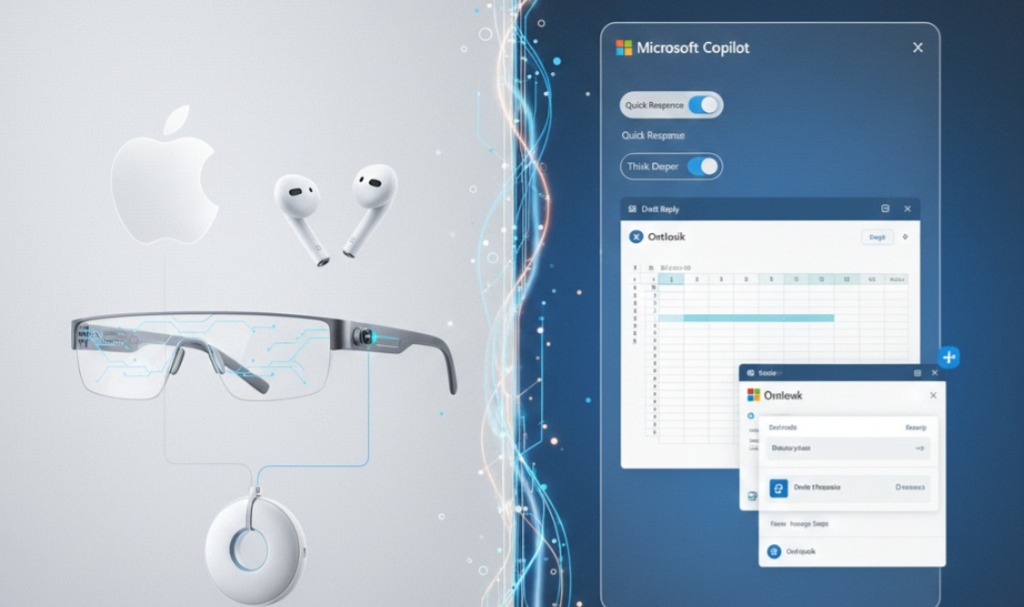
Bloomberg’s Mark Gurman broke the story: Apple is building three AI-powered wearables right now. Smart glasses with cameras. AI-enhanced AirPods (yes, with cameras). And a pendant that hangs around your neck, watching and listening
.
This isn’t theoretical. Production could start this year.
Let me explain why this matters more than another LLM benchmark.
The “Siri Problem” Is Becoming the Siri Solution
We’ve all bashed Siri. It’s been the punchline of AI jokes for a decade.
But here’s the thing—Apple isn’t trying to beat GPT-4 at coding. They’re doing something sneakier: making AI invisible.
The glasses (codename N50 internally) won’t replace your iPhone. They’ll be “heavily reliant” on it
. The AirPods with cameras? They won’t take photos for your Instagram. They’ll feed visual data to AI models for “spatial awareness”
.
Translation: Apple wants AI that sees what you see, hears what you hear, and knows where you are—without you pulling out a screen.
Why this approach works:
- No typing prompts in public like a weirdo
- No context-switching between apps
- No remembering what you asked five minutes ago
Just… ambient intelligence. Creepy? Maybe. Convenient? Absolutely.
Microsoft Just Dropped GPT-5.2 (And Nobody Noticed)
While Apple chased hardware, Microsoft shipped software.
Quietly, in late January, Microsoft 365 Copilot Chat started offering GPT-5.2 with two modes: “Quick Response” and “Think Deeper”
.
Quick Response = instant answers for simple stuff.
Think Deeper = multi-step reasoning for complex problems.
The kicker? It automatically routes your prompt to the right mode. You don’t choose. It decides based on what you’re asking
.
This is bigger than it sounds.
Most of us waste time picking models, tweaking settings, second-guessing whether we need “reasoning” or “speed.” Microsoft removed that friction. The AI just… handles it.
Real impact for actual humans:
- Faster email drafting without the “waiting for AI” lag
- Complex Excel analysis that doesn’t timeout
- Coding help that understands multi-file context
Plus, they made GPT-5 the default across all Copilot Chat experiences back in December
. No opt-in. No upgrade button. It just got better while you weren’t looking.
The Wearable AI War Is About Data, Not Devices
Here’s what Apple and Microsoft both understand: The company that owns the input owns the future.
ChatGPT knows what you type. These new wearables will know:
- Where you looked
- What you heard
- Who you were with
- What you were doing
That’s not just more data. It’s contextual data. And context is what makes AI actually useful instead of just impressive.
The trade-offs nobody’s talking about:
Apple’s pendant hangs around your neck. Always on? Probably not—but the microphone might be. The glasses have cameras pointing wherever you look. The AirPods see your environment
.
This is Google Glass all over again, except Apple learned from Google’s mistakes. No geeky aesthetic. No “glasshole” social stigma. Just normal-looking devices that happen to be sentient.
What You Should Actually Watch For
This week: Test Copilot Chat’s new modes if you have Microsoft 365. The “Think Deeper” feature handles multi-step reasoning better than most standalone AI tools
.
This quarter: Watch for Apple developer announcements. If they open these wearables to third-party apps, we get an ecosystem. If they keep it locked down, we get expensive toys.
This year: Privacy regulations. These devices collect data that makes smartphones look like dumb terminals. Europe’s AI Act? California’s privacy laws? They weren’t written for AI that watches through your glasses.
The Real Story Here
We’re moving from generative AI to ambient AI.
ChatGPT generates text. Claude generates code. These new systems generate assistance based on your real-world context.
Microsoft’s approach: Embed smarter models where you already work (Excel, Outlook, Teams)
.
Apple’s approach: Embed AI in what you wear so you never “use” AI—you just live with it
.
Both are betting that the future isn’t AI you visit. It’s AI that accompanies you.
The uncomfortable truth: One of these companies will know more about your daily life than your spouse does. The question is whether that creeps you out or excites you.
Probably both. That’s the point.
