


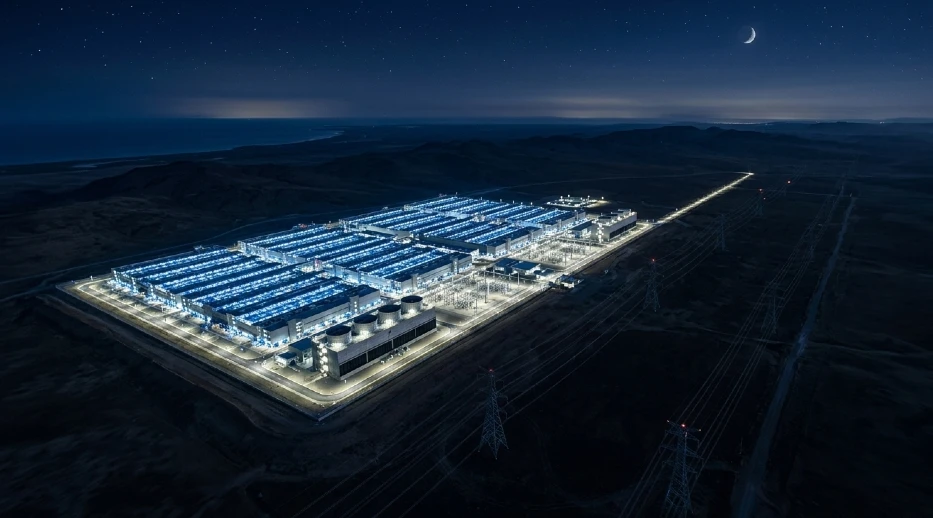
Your electricity bill isn’t going up because of AI — at least, that’s what Big Tech wants you to believe. Under mounting regulatory pressure, major technology companies have officially pledged to shield consumers from the surging power costs driven by their rapidly expanding AI infrastructure. It sounds reassuring. But the numbers behind that promise are staggering.
What Actually Happened
In early March 2025, several of the world’s largest tech firms — names that run the AI tools millions use daily — made a public commitment: they will not pass the rising electricity costs from AI data centers directly onto end users or consumers.
The announcement came amid growing scrutiny from lawmakers and utility regulators who are increasingly alarmed by how much power AI is consuming. We’re not talking about incremental growth. AI model training and inference workloads now demand electricity at a scale comparable to small cities. Some estimates put a single large language model training run at the energy equivalent of powering tens of thousands of homes for a year.
And that’s just one model. These companies run thousands of workloads simultaneously.
Why This Matters Right Now
Here’s the uncomfortable truth the pledge doesn’t fully address: the grid is already straining.
Across the United States, regional grid operators — from PJM in the Mid-Atlantic to ERCOT in Texas — have flagged data center load growth as a serious reliability concern. Utility companies are approving new data center connections at unprecedented rates, and in some regions, they’re struggling to keep up. Transformer shortages, transmission bottlenecks, and aging infrastructure are real friction points.
The question isn’t just who pays. It’s whether the infrastructure can handle the demand at all.
The key tension: Tech giants can absorb costs on paper — but they can’t absorb physical electricity that doesn’t exist yet.
What “Not Passing Costs to Consumers” Actually Means
Let’s be precise here, because the pledge is narrower than it sounds.
- It applies to consumer-facing pricing — meaning your ChatGPT subscription, your Copilot tier, your Google One plan.
- It does not necessarily mean enterprise and API pricing is frozen.
- It does not address indirect cost increases, like ISPs or device manufacturers adjusting rates as grid costs ripple outward.
- It’s a voluntary pledge, not a regulatory commitment or legally binding contract.
So while it’s a meaningful signal — especially politically — it’s not a full guarantee. Think of it as a pressure release valve during a high-scrutiny moment, not a structural solution.
The Regulatory Pressure Behind the Move
This pledge didn’t come out of nowhere. Congress and the Federal Energy Regulatory Commission (FERC) have been circling the AI-energy nexus for months. Several state utility commissions have started asking pointed questions about whether data center customers are getting favorable interconnection treatment at the expense of residential ratepayers.
The political optics are brutal for tech firms: AI is already a polarizing topic, and the idea that your electric bill goes up so a hyperscaler can train its next frontier model is exactly the kind of narrative that fuels anti-tech sentiment. The pledge is, in part, a preemptive move.
Smart PR. Necessary, even. But the underlying energy math doesn’t change.
Industry Impact — Who Feels This Most?
For everyday consumers: In the short term, this pledge likely holds. Big Tech has enormous margin buffers to absorb infrastructure costs. Microsoft, Google, Amazon, and Meta collectively spent over $200 billion in capital expenditures in 2024 — a significant chunk directed at AI infrastructure. They can absorb electricity cost increases for now.
For smaller AI companies: This is where it gets harder. Startups and mid-tier AI firms that rely on cloud compute don’t have the same cushion. If AWS, Azure, or GCP quietly raises wholesale compute pricing to offset energy costs, smaller operators feel it immediately — and that cost eventually reaches users.
For utilities and grid operators: The real pressure lands here. Utilities are being asked to build new generation capacity at a pace that hasn’t been seen since the mid-20th century industrial boom. Nuclear, natural gas, solar — all are being fast-tracked. But “fast-tracked” in energy terms still means years, not months.
Trending AI Tools This Week Worth Knowing (March 4)
Quickly — because context matters and these dropped in the same news cycle:
- Claude Code now has voice mode — hands-free coding via voice input. Genuinely useful for developers who think out loud or work in accessibility-forward environments.
- OpenAI Codex + Figma integration — bidirectional code-to-design workflows. Designers and developers can now push and pull between visual and code layers. This one has real workflow implications.
- Hermes Agent — a new open-source personal AI agent with persistent memory. The open-source angle is significant; persistent memory in agents has been a pain point, and community-built solutions are closing the gap fast.
None of these are directly tied to the data center story — but they illustrate exactly why compute demand keeps climbing. More capable models, more integrations, more always-on agents. The energy curve doesn’t bend down.
What Comes Next
The pledge buys goodwill, but the structural challenge remains unsolved. Here’s what to watch:
- Federal AI energy legislation — bills are in committee. Expect movement in late 2025.
- Nuclear revival — Microsoft’s Three Mile Island deal and Google’s nuclear agreements signal that Big Tech is betting on clean baseload power, not just offsets.
- Efficiency breakthroughs — model distillation, quantization, and hardware improvements (like NVIDIA’s Blackwell architecture) are actively reducing per-query energy costs. This is the most underreported positive story in AI energy.
- Enterprise pricing shifts — watch API and cloud compute pricing in Q3–Q4 2025. That’s where any cost pressure will surface first.
The Bottom Line
Tech giants absorbing AI data center electricity costs is a good-faith move — and a politically savvy one. For now, consumers won’t see it on their bills. But the energy demand from AI is real, structural, and accelerating. The pledge addresses the symptom. The grid problem is the disease.
The companies that figure out how to run powerful AI on less power — not just promise to pay for more of it — will win the next decade.
check out our latest news
Elon Musk Loses the AI Transparency Law Battle — And the Entire AI Industry Should Pay Attention
