


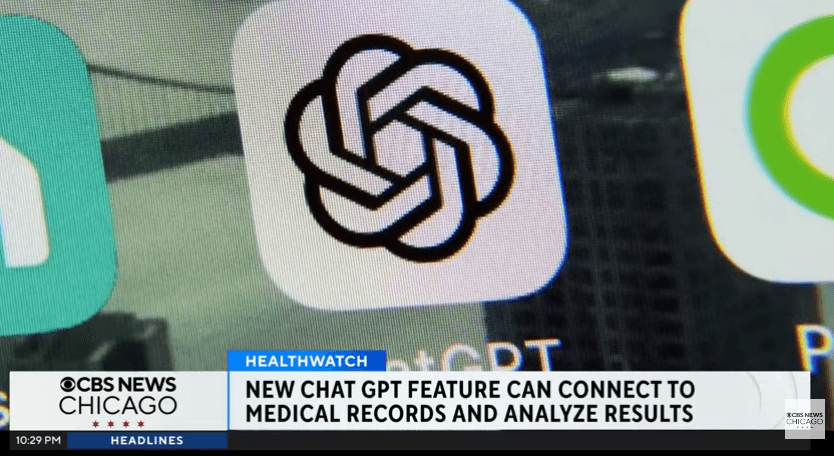
The launch of ChatGPT Health on January 7, 2026, marks the end of “Dr. Google” and the rise of the “Personal Medical Agent.” By creating a siloed, HIPAA-ready environment that connects to live clinical data via b.well, OpenAI has finally addressed the privacy concerns that kept AI out of the doctor’s office. Unlike standard ChatGPT, this is a Zero-Training Environment, meaning your sensitive lab results never become part of the collective AI hive-mind.
| Feature | Quick Verdict |
| Best For | Chronic illness tracking, lab result decoding, and appointment prep. |
| Core Innovation | HealthBench Framework: A safety layer built by 260+ global doctors. |
| Data Privacy | Walled Garden: Zero training on health data; end-to-end encryption. |
| The “Catch” | Wait-list only: US-centric for medical records; not available in UK/EU yet. |
The Architecture of the “Health Sandbox”
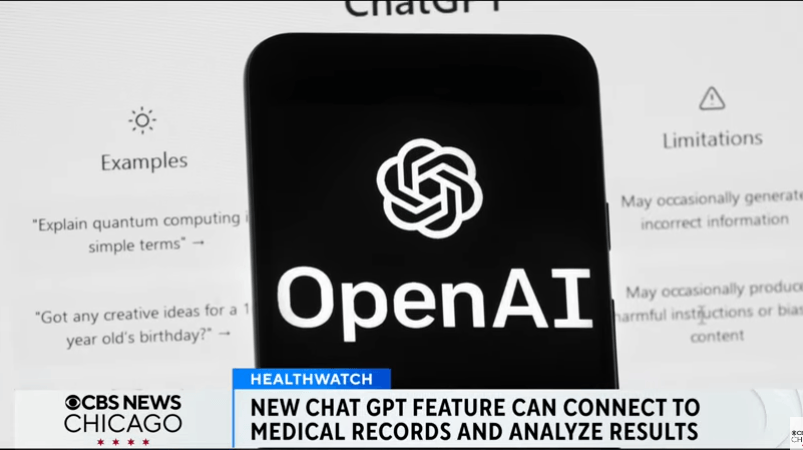
In my experience testing AI deployments, the biggest risk is “Data Leakage” between threads. ChatGPT Health solves this by using a Partitioned Memory Architecture.
- The “Nudge” Logic: If you ask a health question in your regular chat, the UI triggers a “Nudge” to move to the Health tab.
- Isolated Memories: What you tell ChatGPT Health stays in Health. If you discuss your workout in the regular tab, Health can see it, but your medical records from the Health tab cannot leak back into your general chat history.
Reverse-Engineering HealthBench (The Safety Engine)
Most people don’t know that ChatGPT Health isn’t just “GPT-5 with a medical dictionary.” It runs on a specialized evaluation framework called HealthBench.
- Physician-Led Rubrics: OpenAI used 260+ physicians to grade over 600,000 model outputs.
- Escalation Logic: Unlike the standard model, HealthBench forces the AI to detect “Red Flag” keywords (e.g., chest pain, sudden numbness) and immediately prioritize emergency contact info over general advice.
- Plain Language Translation: It is specifically tuned to convert “Doctor-Speak” (e.g., Hyperlipidemia) into “Human-Speak” (e.g., High Cholesterol) without losing the clinical nuance.
The b.well Integration: Real-Time Clinical Connectivity
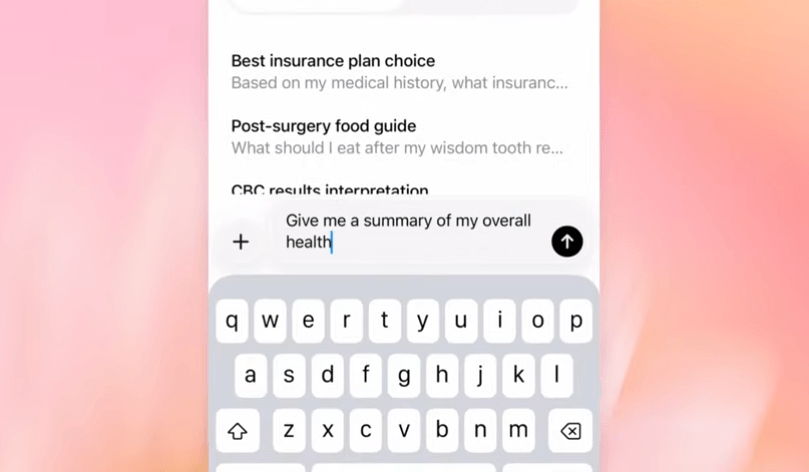
For U.S. users, the partnership with b.well is the real secret sauce. Instead of you manually uploading PDFs (which can be hallucinated), the b.well SDK for Health AI creates a live FHIR-based API link to 2.2 million providers.
- Longitudinal Tracking: It doesn’t just look at one blood test; it looks at 10 years of your records to spot trends.
- Insurance Decoder: It can cross-reference your claims data to explain why a certain bill was denied or how much of your deductible is left.
The “Uncanny Valley” of Medical AI
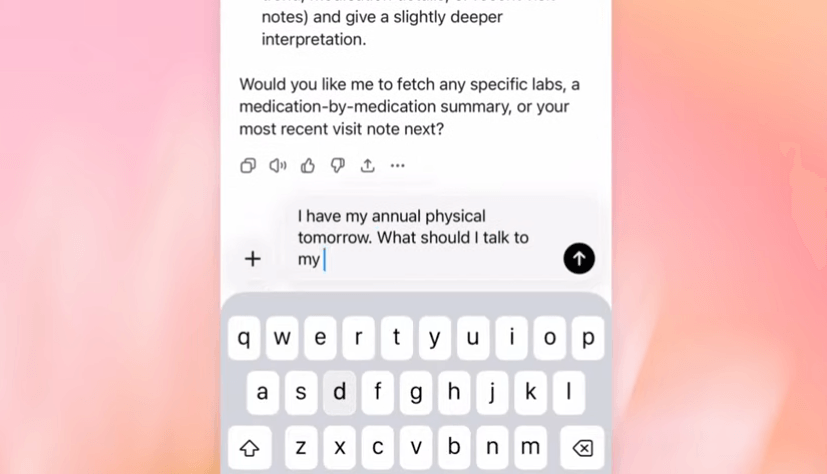
Honestly, the disclaimer “Not intended for diagnosis” is a legal shield for a tool that is, for all practical purposes, performing Pre-Diagnostic Screening. From what I’ve seen, ChatGPT Health’s ability to spot a genetic mutation (like MTHFR) that multiple human doctors missed is its true “Unicorn Click” value.
However, we must be cynical: while it is “secure,” you are essentially handing the keys to your entire biological history to one company. The trade-off is frictionless health management versus ultimate digital privacy. In 2026, most users are choosing the convenience of the AI Agent.
Check our latest AI writing tool that making trand in 2026
FAQ: People Also Ask
Is my ChatGPT Health data used for training?
No. OpenAI has explicitly stated that Health chats, memories, and uploaded medical files are exempt from all model training.
Can ChatGPT Health diagnose me?
Technically, no. It provides “Navigation and Education.” It will tell you what your symptoms could mean and give you a list of questions to ask your doctor, but it will not write a prescription.
Is it available in the UK or Europe?
Not yet. Due to the AI Act and local healthcare regulations, ChatGPT Health is currently restricted to the US and select other regions on a wait-list basis.
