


The evolution of AI infrastructure has accelerated significantly from 2023 to 2025. AI capabilities have empowered businesses and industries with new possibilities. The infrastructure for training and deploying AI models has evolved. New hardware and software advances emerge daily, making AI more scalable, efficient, and accessible. Robust AI infrastructure is the backbone of innovation since, without a strong foundation, the complete potential of AI cannot be realized. By 2026, the role of AI infrastructure will become even more imperative, with certain key trends that shall mold the future of AI.
I have written this article from the perspective of exploring key AI infrastructure trends that will shape the future in 2026. The data and insights are based on the latest industry reports and research, and I hope my efforts can help you better understand how these trends are evolving. If you need further help, feel free to ask!
The Rise of Specialized AI Hardware
1.Next-Generation AI Chips:
The demand for AI chips is surging, and custom silicon is on the rise, including but not limited to NVIDIA Blackwell, AMD MI400, and Intel Gaudi 3, specifically designed for AI tasks. TPUs and neural engines will be integrated into more and more industries, enabling AI models to run efficiently.
2.Energy Efficiency & Performance Balance:
Power consumption by AI models performing massive computations is also very high. Because of this, in 2026, energy-efficient chip designs and liquid cooling systems will be adopted for AI infrastructure. Hybrid CPU-GPU systems will also emerge that provide a much better balance between power and performance.
3.Edge AI Hardware:
Compact and power-efficient chips are just a few examples of Edge AI hardware that developers will increasingly use. Performing AI inference at device edge reduces latency and improves real-time decision-making.
Cloud-to-Edge Convergence
1. Distributed AI Architectures:
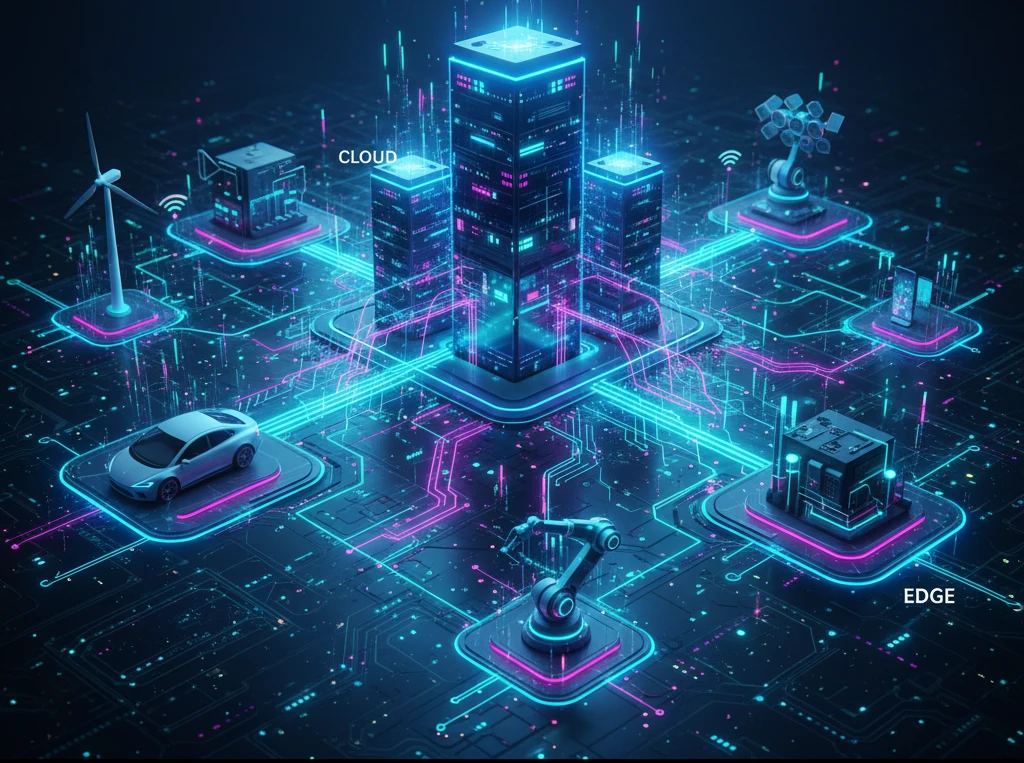
Cloud computing and edge deployment are converging, driving the use of distributed AI architectures. Technologies will be developed to seamlessly integrate AI workloads from the cloud to edge devices, optimizing real-time inference.
2. Data Gravity & Local Processing:
Shifting computation to closer proximity to data sources means higher efficiency in AI infrastructure. Local processing will decrease latency and data transfer costs, which are critically needed for industries performing vast data-intensive tasks.
3.Hybrid Infrastructure Models:
The use of federated learning and decentralized networks will be encouraged. This in return would make the AI infrastructure more flexible, resilient, and secure. It will allow organizations to use a combination of distributed computing and centralized resources with hybrid models.
AI Infrastructure for Foundation Models
1.Scaling for Multimodal and 1T+ Parameter Models:
Large-scale infrastructure has become an important consideration for training next-generation AI models, such as LLMs and vision-language models, both scaling into the trillions of parameters. By 2026, this may drive the development of specialized architectures for model training.
2.Cluster-Oriented Compute Orchestration
High-performance interconnects like NVLink, InfiniBand, and optical interconnects will be integrated to enable fast communication in large clusters of GPUs/TPUs. These interconnects would improve the efficiency of AI infrastructure drastically.
3.Efficient Training Pipelines:
This will involve automating efficient training pipelines. Checkpointing, model parallelism, and memory optimization techniques will be developed that will further scale up and provide economically viable AI infrastructure.
Sustainable AI Infrastructure
1.Green Data Centers:
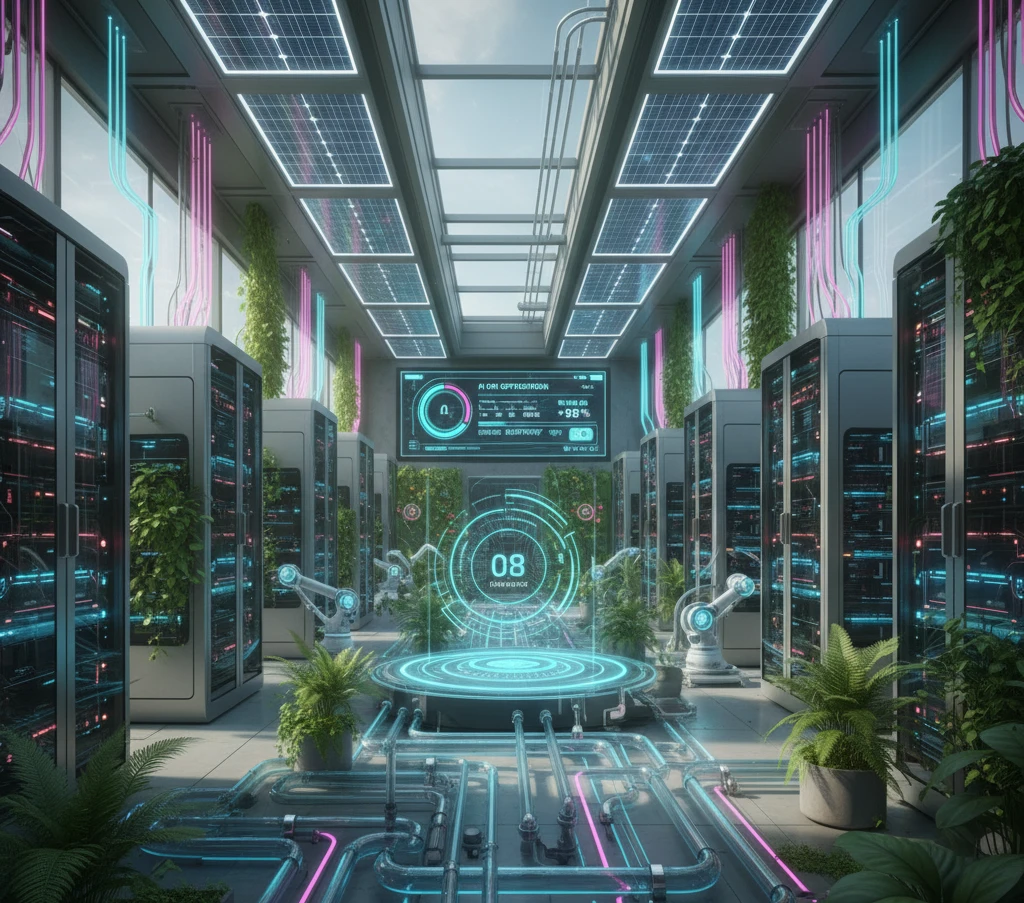
In their design, data centers will use renewable energy sources with an eye toward sustainability. Carbon-aware scheduling and energy-efficient design will be integrated to reduce the environmental footprint of AI infrastructure.
2.AI for Infrastructure Optimization:
AI will optimize the infrastructure of AI. AI-driven systems, integrated into managing energy loads, cooling systems, and server utilization, will make the data centers more efficient.
3.Regulatory & ESG Pressures:
Sustainability mandates due to ESG pressures will shape the design of AI infrastructure. Data centers shall have to become sustainable with the help of these regulations.
Top AI Infrastructure
- Cloud-Native AI:Cloud providers like AWS, Google Cloud, and Azure are ensuring easy scaling and deployment of AI applications with the help of serverless and managed AI services. Serverless compute and auto-scaling solutions will empower businesses to address AI workloads.
- Edge Computing: A move to edge computing will help in localizing the AI infrastructure. Since IoT devices are increasing, it is necessary to deploy edge AI models that will enhance real-time processing and decision-making.
- AI-Optimized Hardware: GPUs and TPUs will be in high demand, as they are efficient in handling workloads. Specialized AI chips include the Apple M1, Amazon Inferentia, and Intel Habana Labs, that will optimize AI infrastructure for both performance and energy efficiency.
- Quantum Computing and AI: Quantum computing will be increasingly used to enhance AI algorithms. Quantum machine learning advancements will increase the speed and power of AI systems exponentially.
- Data Pipelines and MLOps: AI models will need to integrate with more robust data pipelines and other MLOps systems. Smarter data gathering, cleaning, and training will help make AI infrastructure more efficient and scalable.
- Distributed Training and Federated Learning: The training of AI models will be carried out in a distributed way across several machines and GPUs. Federated learning will ensure data privacy by training the models using decentralized data.
- AI for DevOps: AI-enabled DevOps tools will optimize AI infrastructure. Automation of code quality and error detection, and optimization of the CI/CD pipeline will further streamline the processes of DevOps.
- Data Privacy and Security: AI-powered cybersecurity systems will be integrated to identify vulnerabilities and respond to real-time threats. Differential privacy and homomorphic encryption will also make the AI infrastructure more secure.
- Sustainability and Green AI: Energy efficiency will mostly depend on the optimization of AI systems. Renewable sources of energy, along with sustainable models, will help decrease the environmental impact of the infrastructure involved in AI.
- Synthetic Data and Augmented Datasets: Synthetic data will be created by using generative AI. Augmented datasets will be utilized in making AI systems more robust to improve the performance of the models.
- AI Governance and Ethical AI Infrastructure: AI Governance frameworks will be developed and ethical AI systems developed. AI infrastructure will be made accountable and fair, ensuring bias detection and transparency.
By 2026, AI infrastructure will further accelerate. Specialized hardware, edge computing, integration with the cloud to the edge, and attention to sustainability make systems more scalable, secure, and efficient. Industries will be able to fully leverage these emerging trends in AI for added capability and drive new innovations that transform AI across all industries.
For solopreneurs, small businesses, and e-commerce ventures, understanding the evolving AI infrastructure is essential. To dive deeper into the best AI tools for solopreneurs in 2026, check out this guide. Explore the state of AI for small businesses in 2026 and discover how AI can enhance your e-commerce product descriptions with the right tools in our latest article on AI tools for product descriptions.
